01
Security operations
Keep incidents, assets, vulnerabilities, risks, and security checks connected.
One practical system to coordinate security operations, governance, evidence, and the people who keep your organization protected.
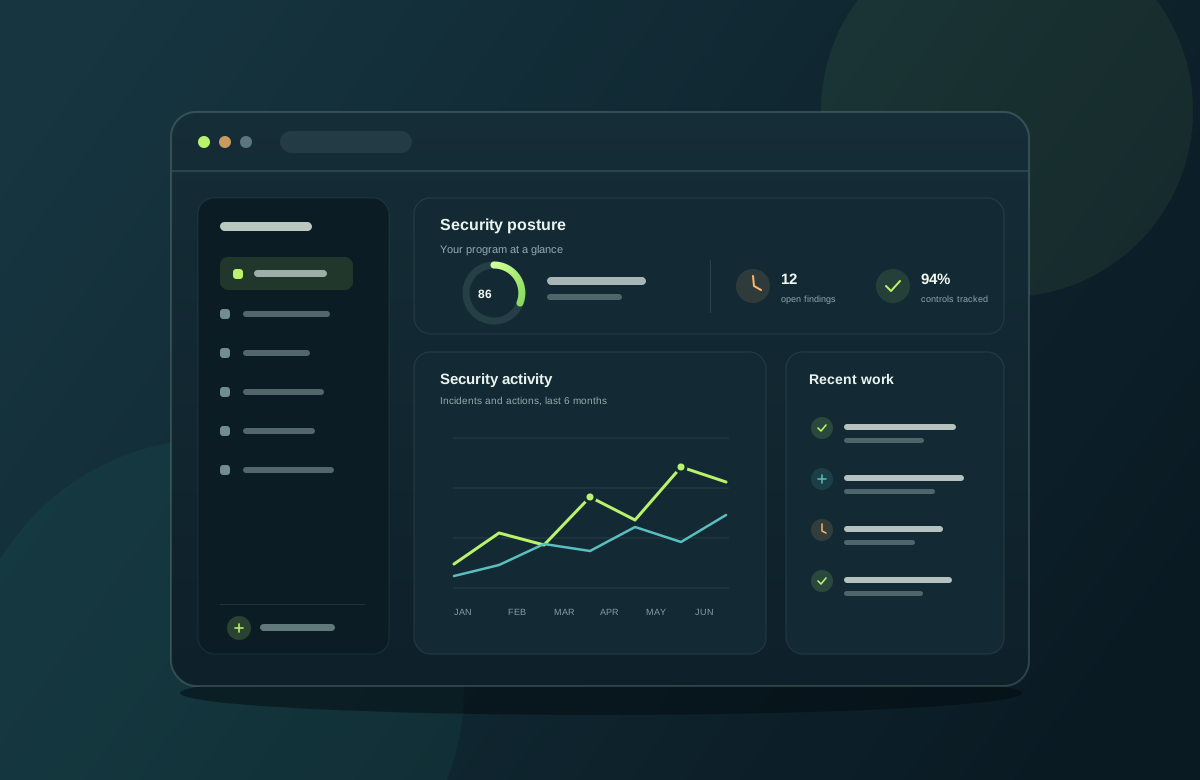
One joined-up approach
Give teams a shared view of the work, without losing the ownership and access boundaries they need.
Keep incidents, assets, vulnerabilities, risks, and security checks connected.
Organize policies, documents, findings, and compliance work with clear ownership.
Give each team the modules it needs, with user-level access and activity visibility.
Explore the platform
Feature availability follows your role, company access, hosting configuration, and the integrations you connect.
Coordinate core security work from discovery through response.
Keep governance evidence organized and tied to accountable work.
Bring everyday operational records and company administration together.
A closer look
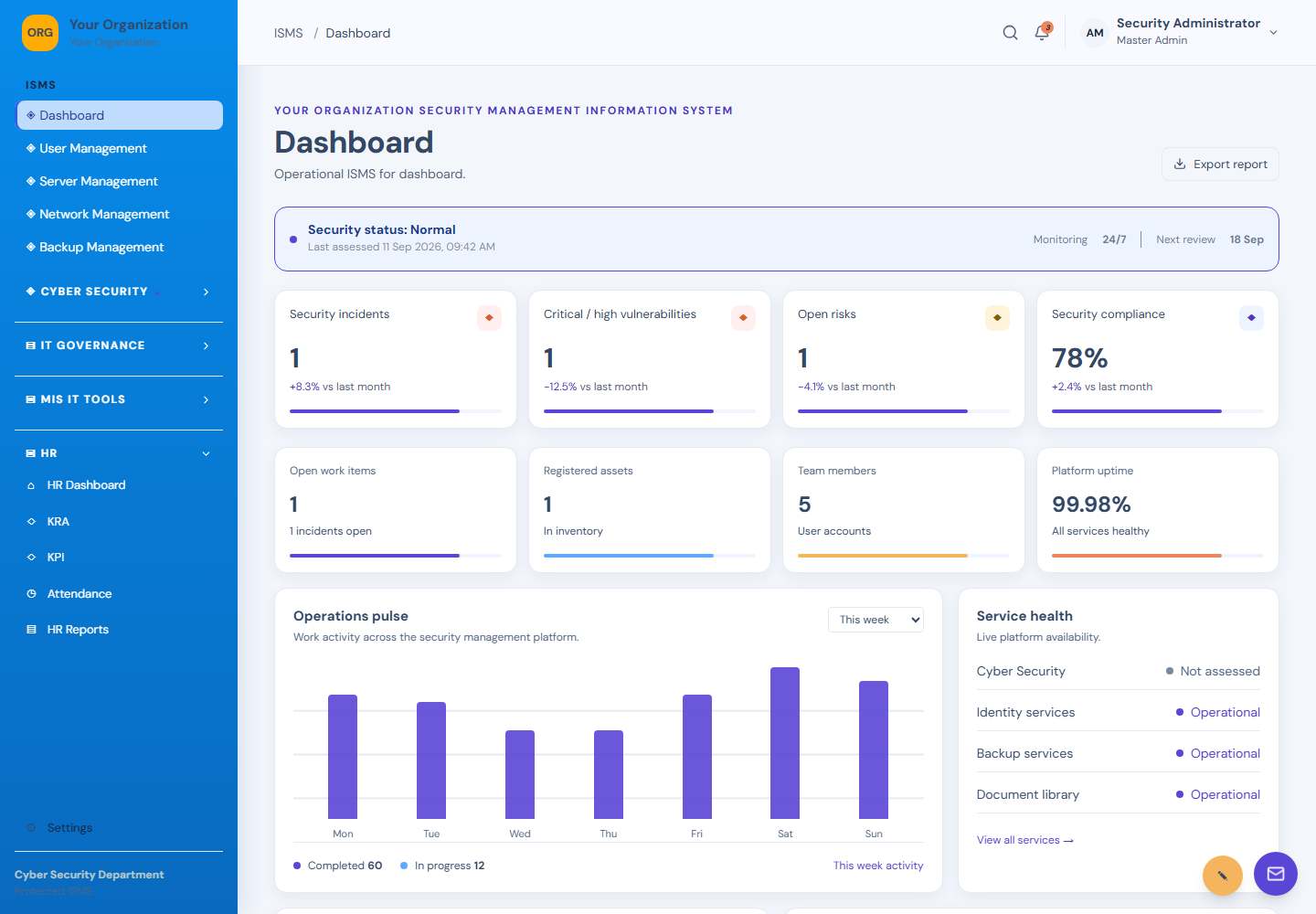
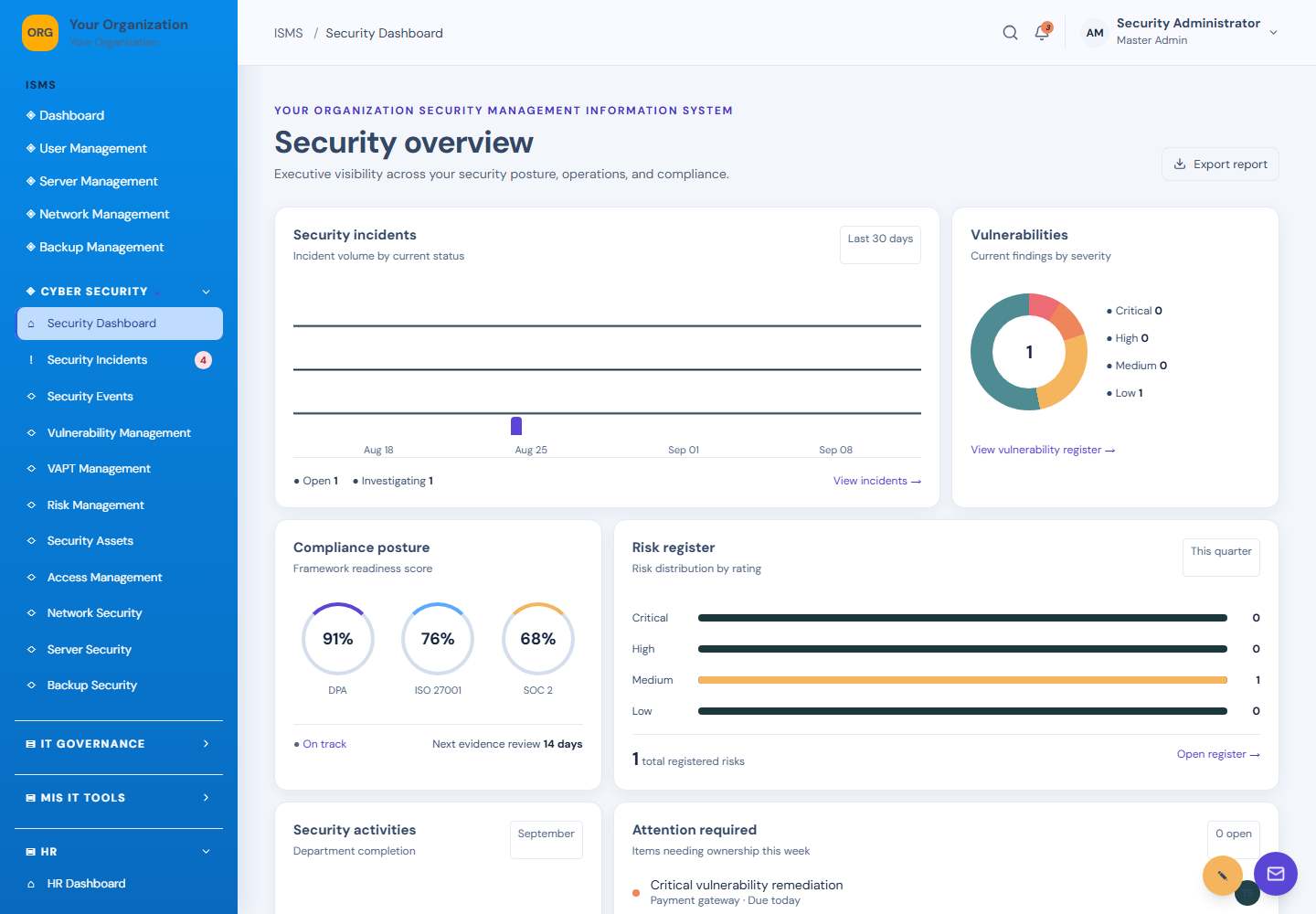
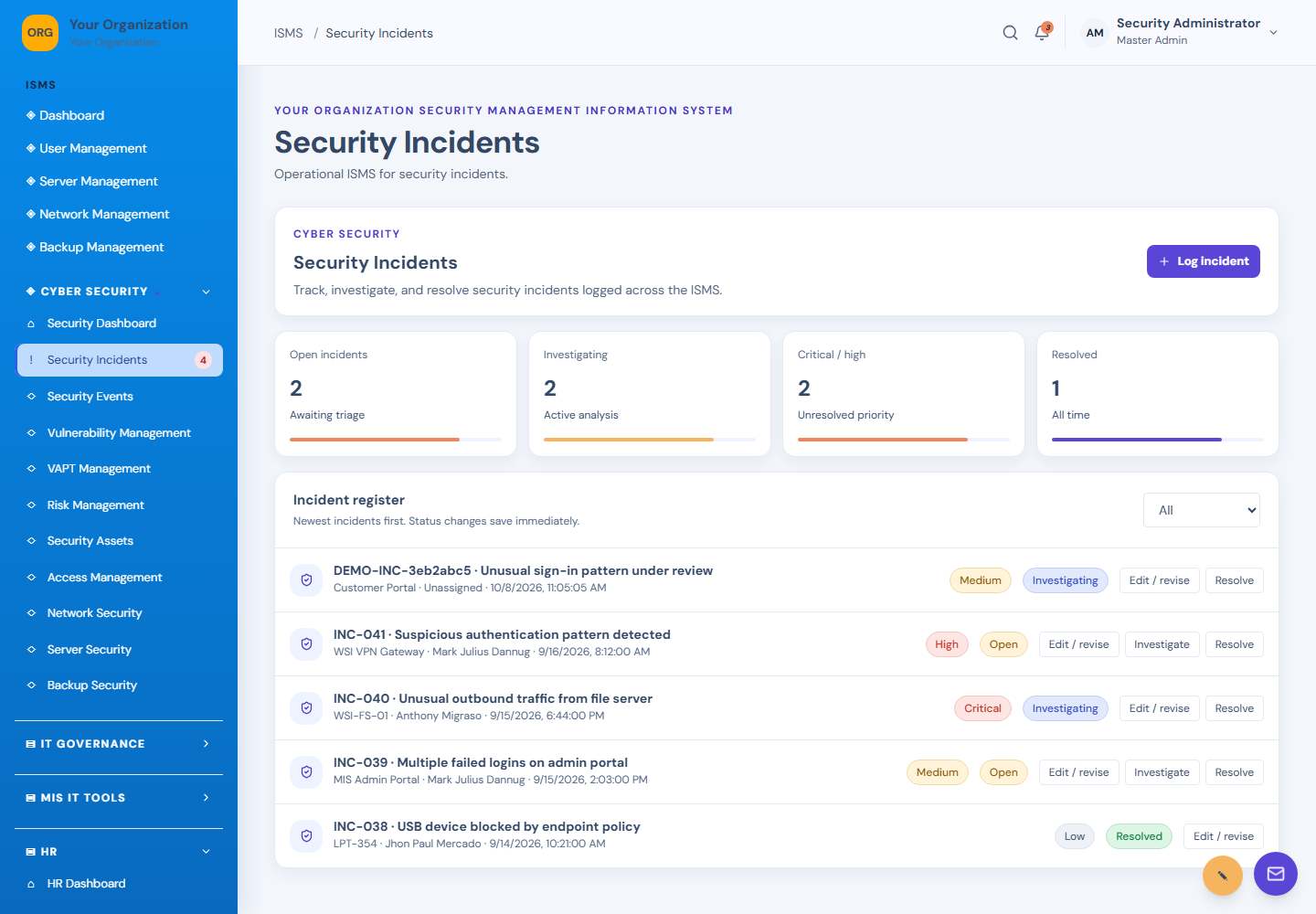
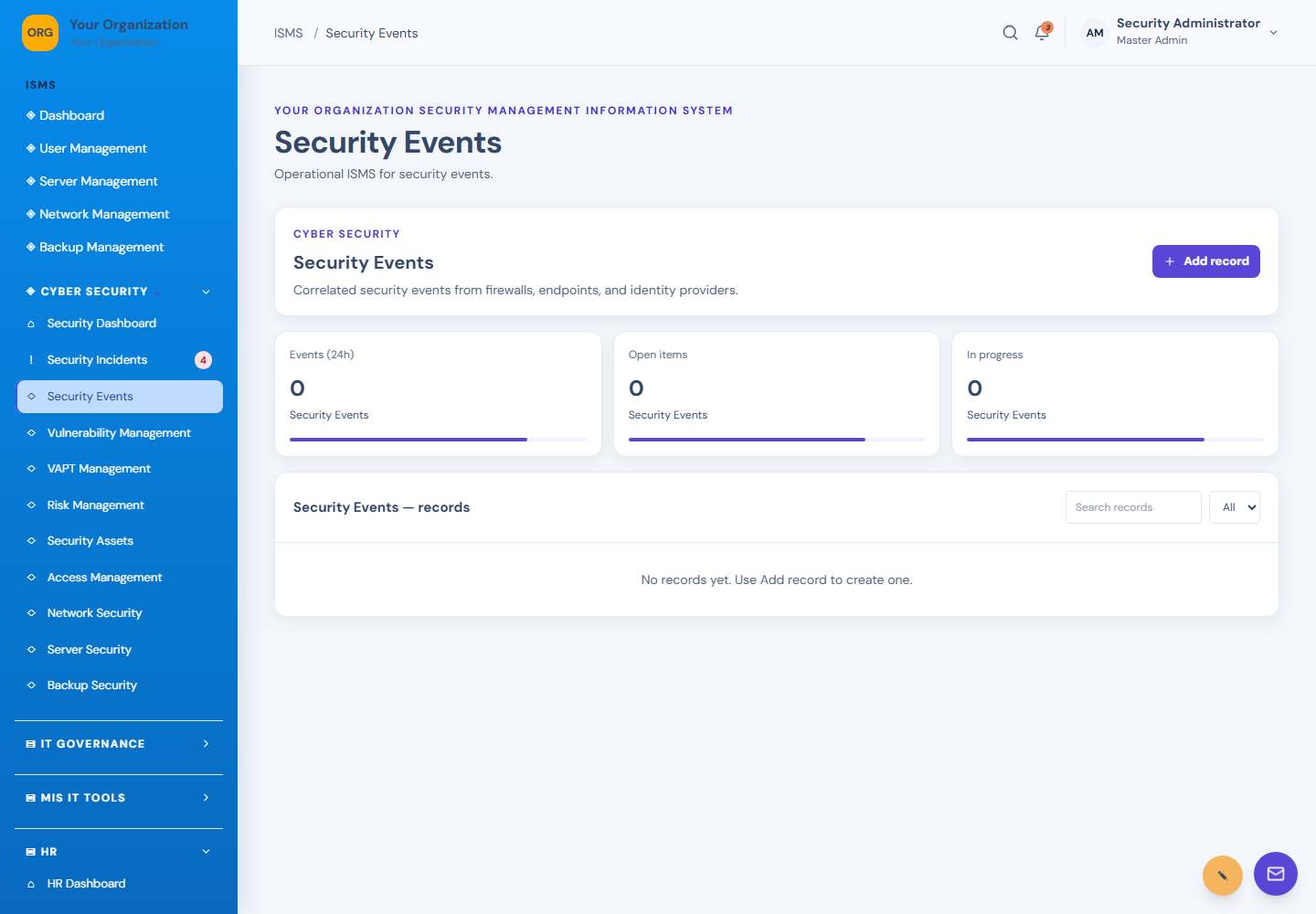
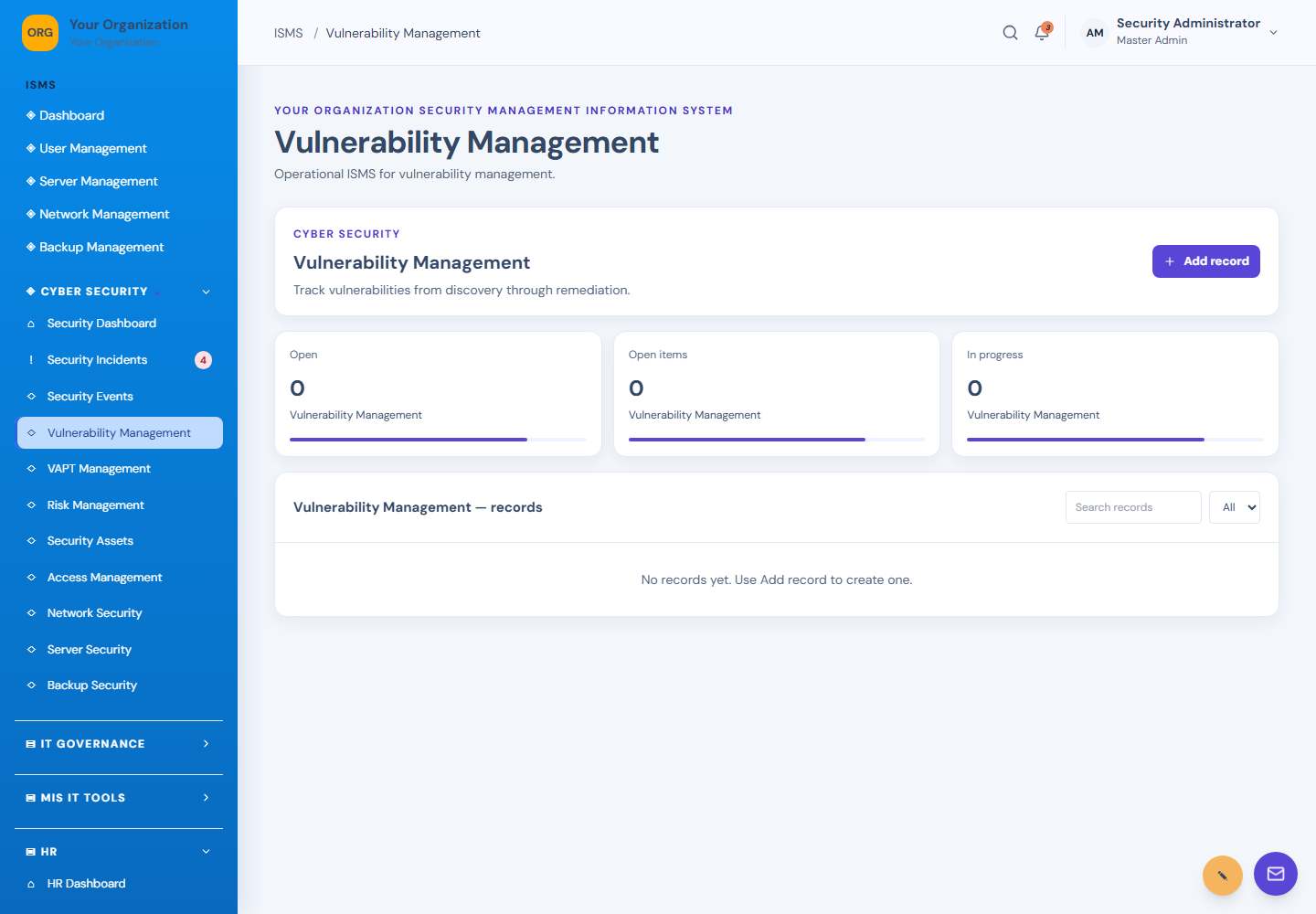
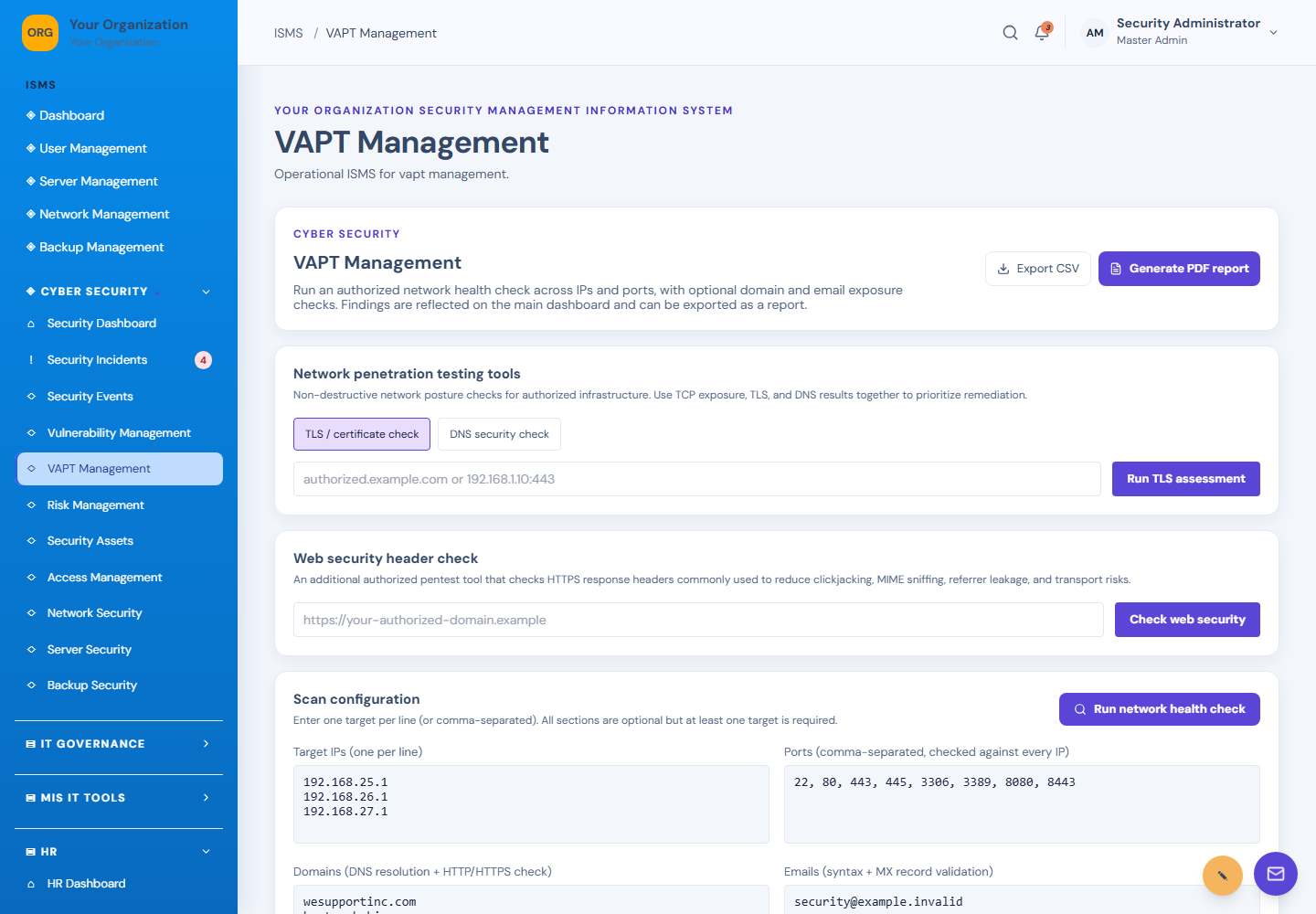
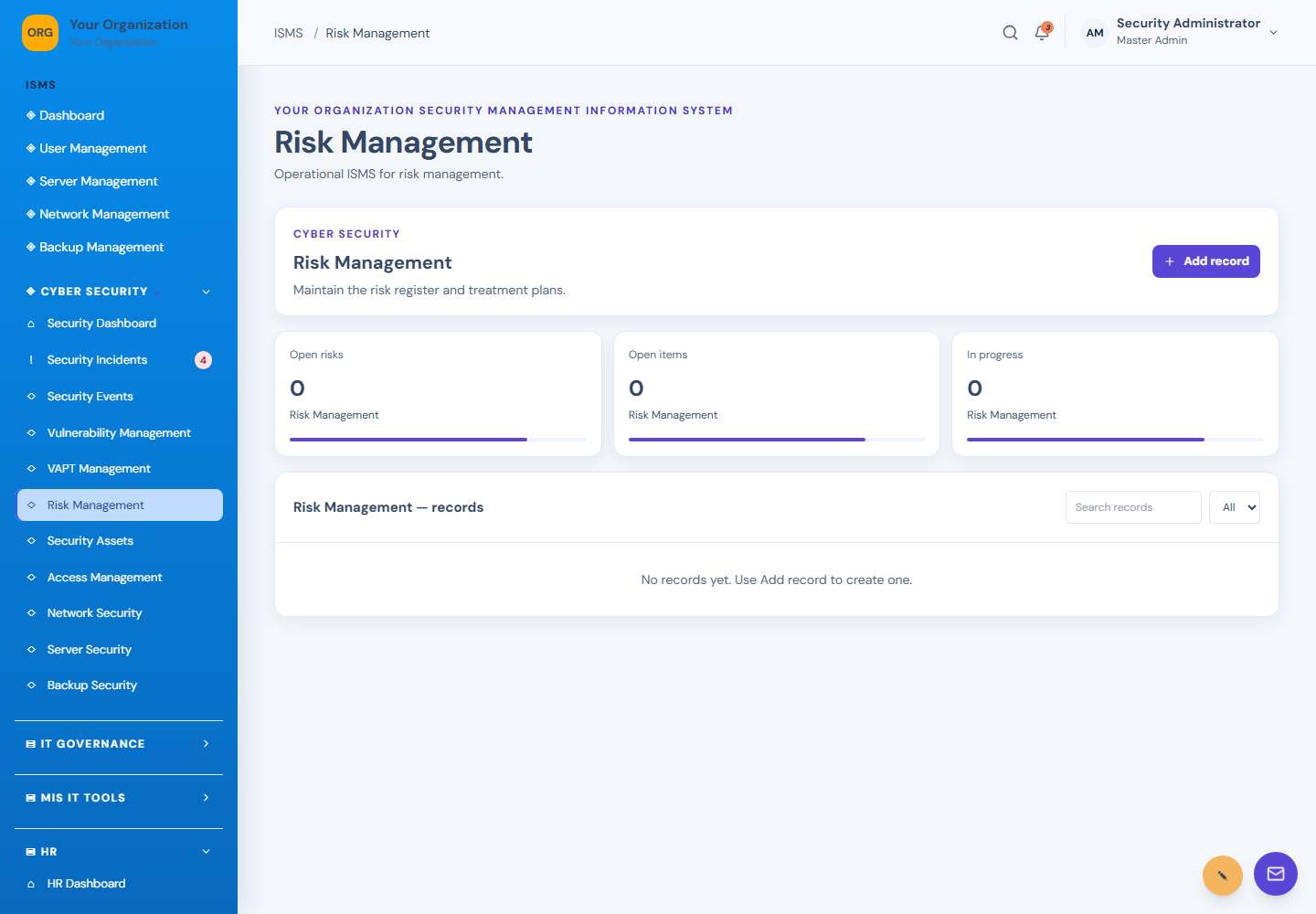
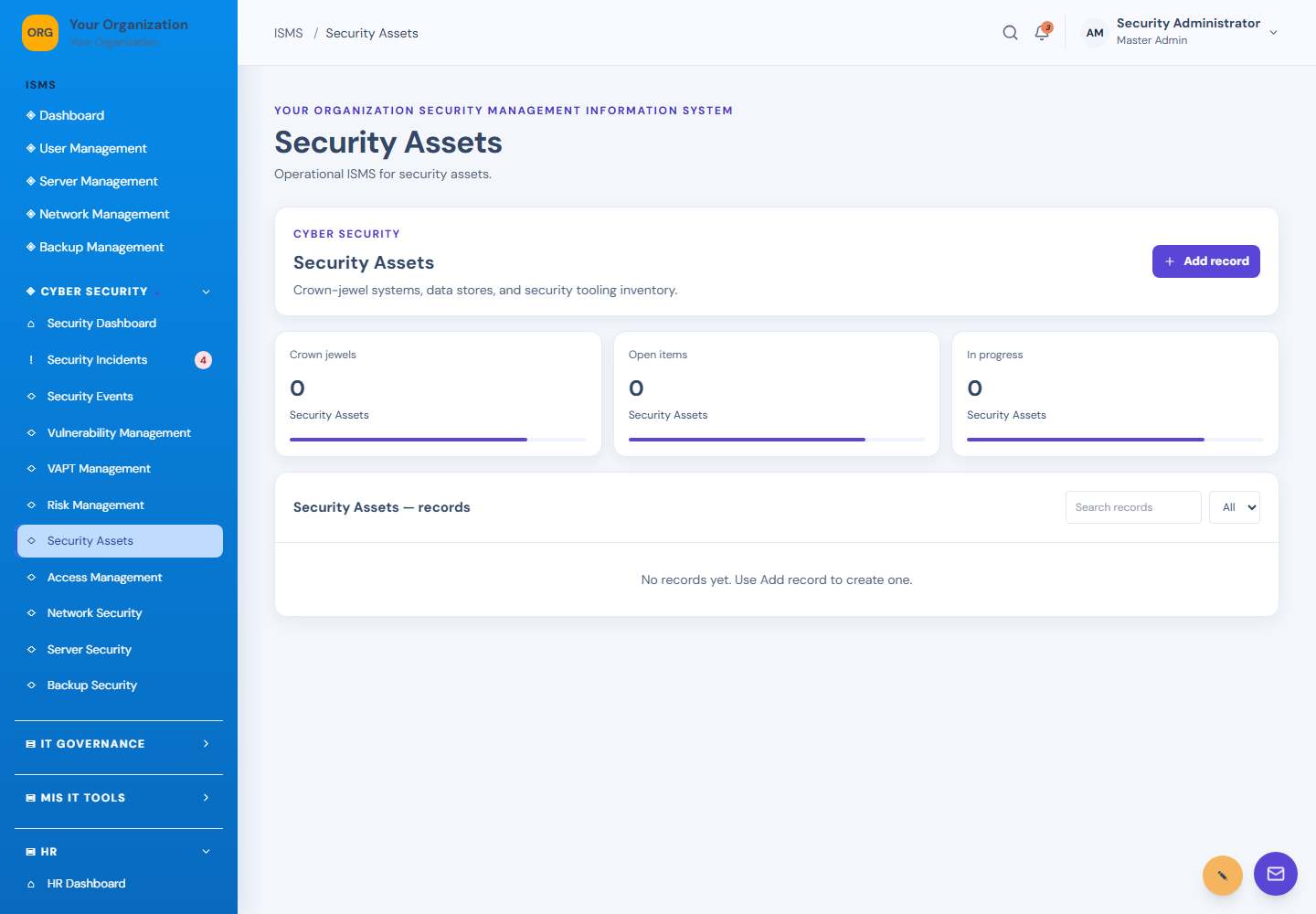
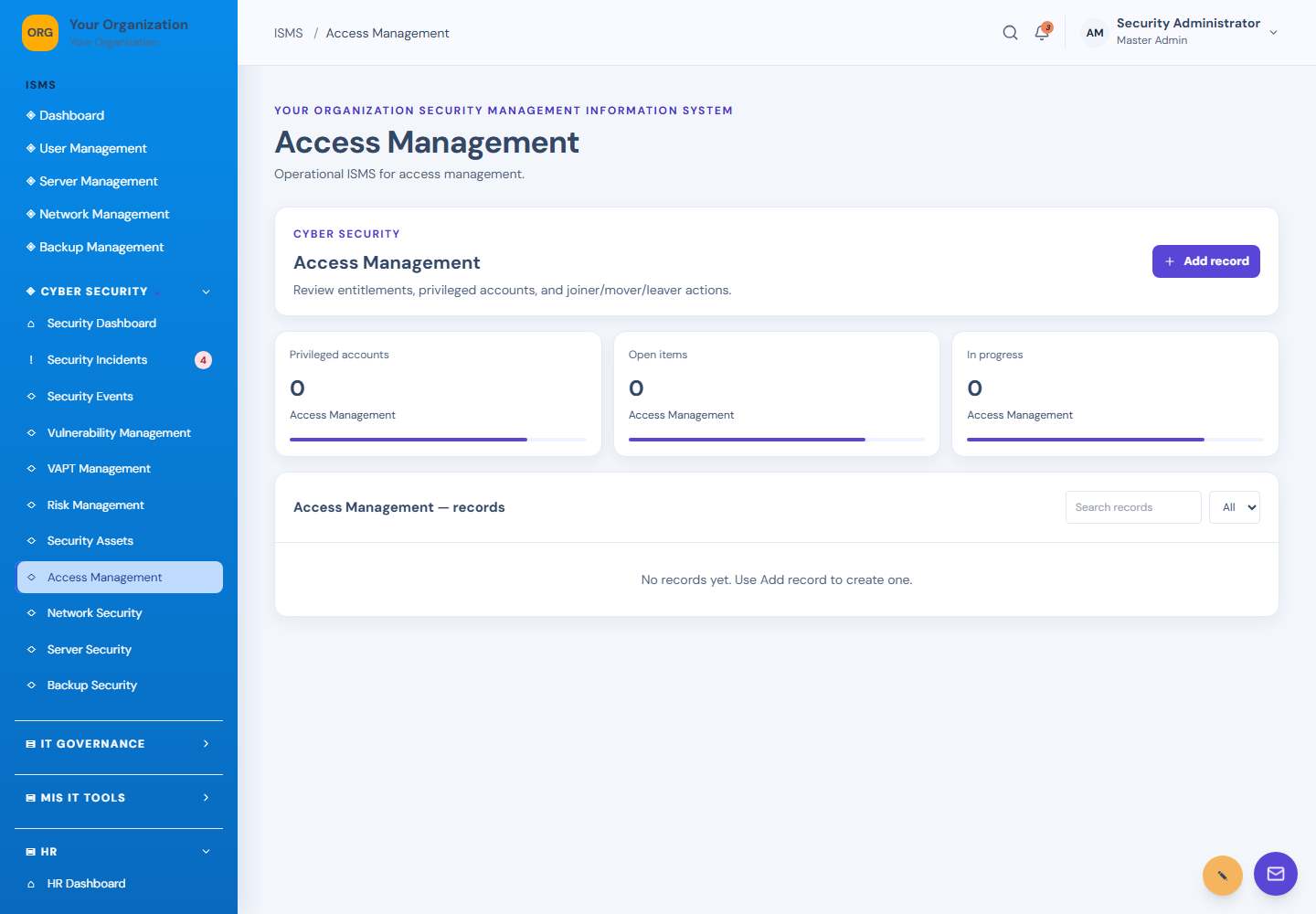
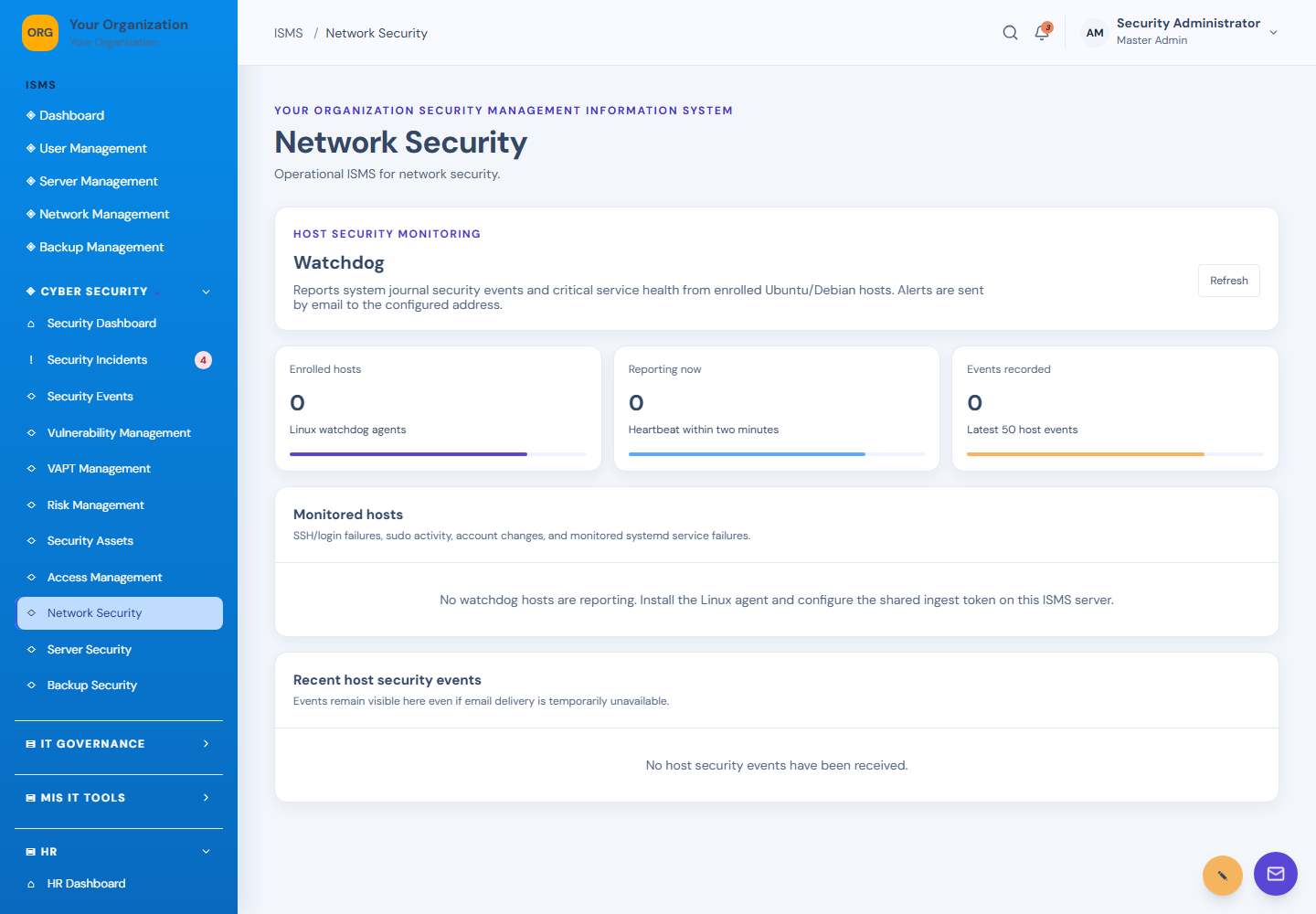
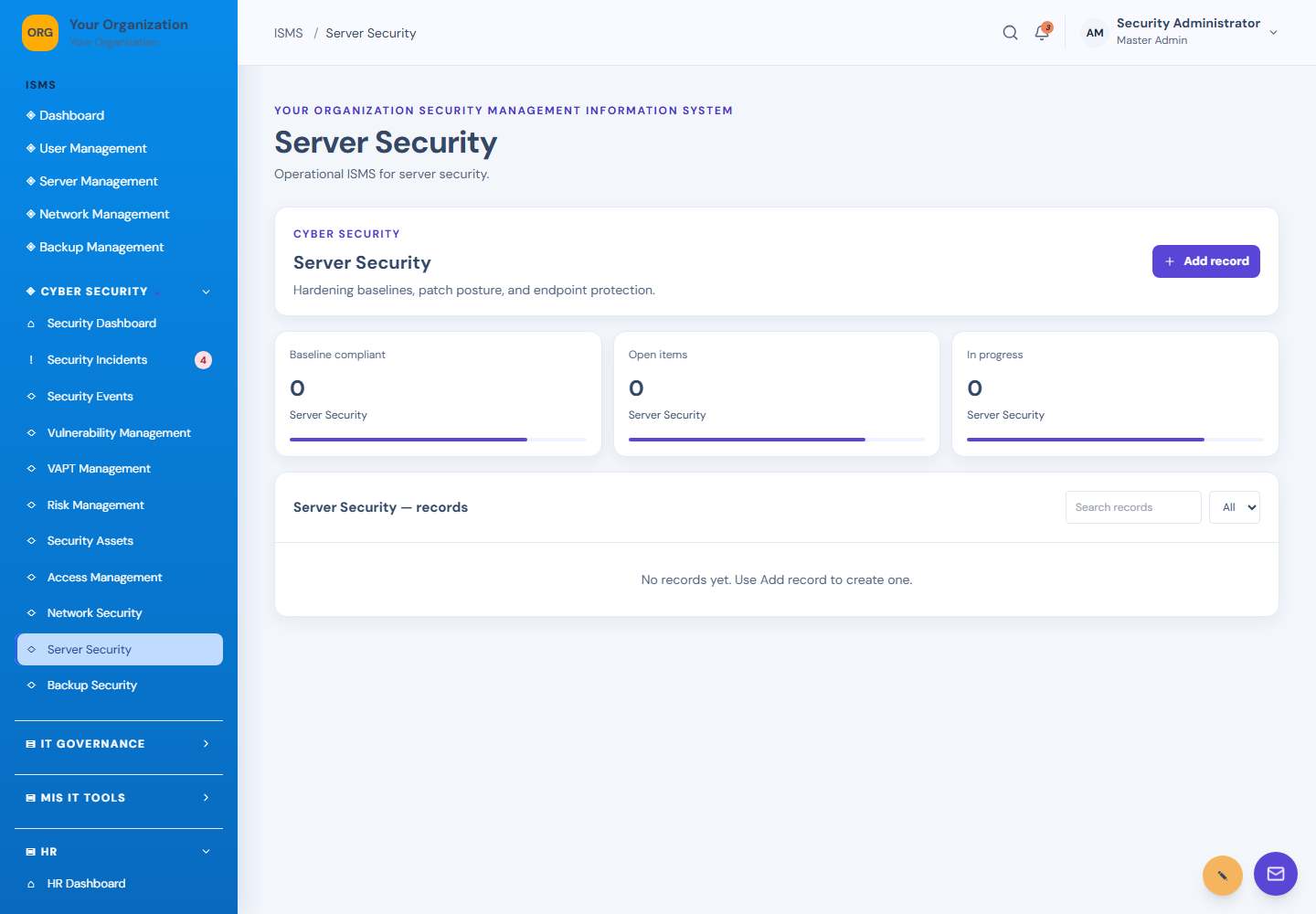
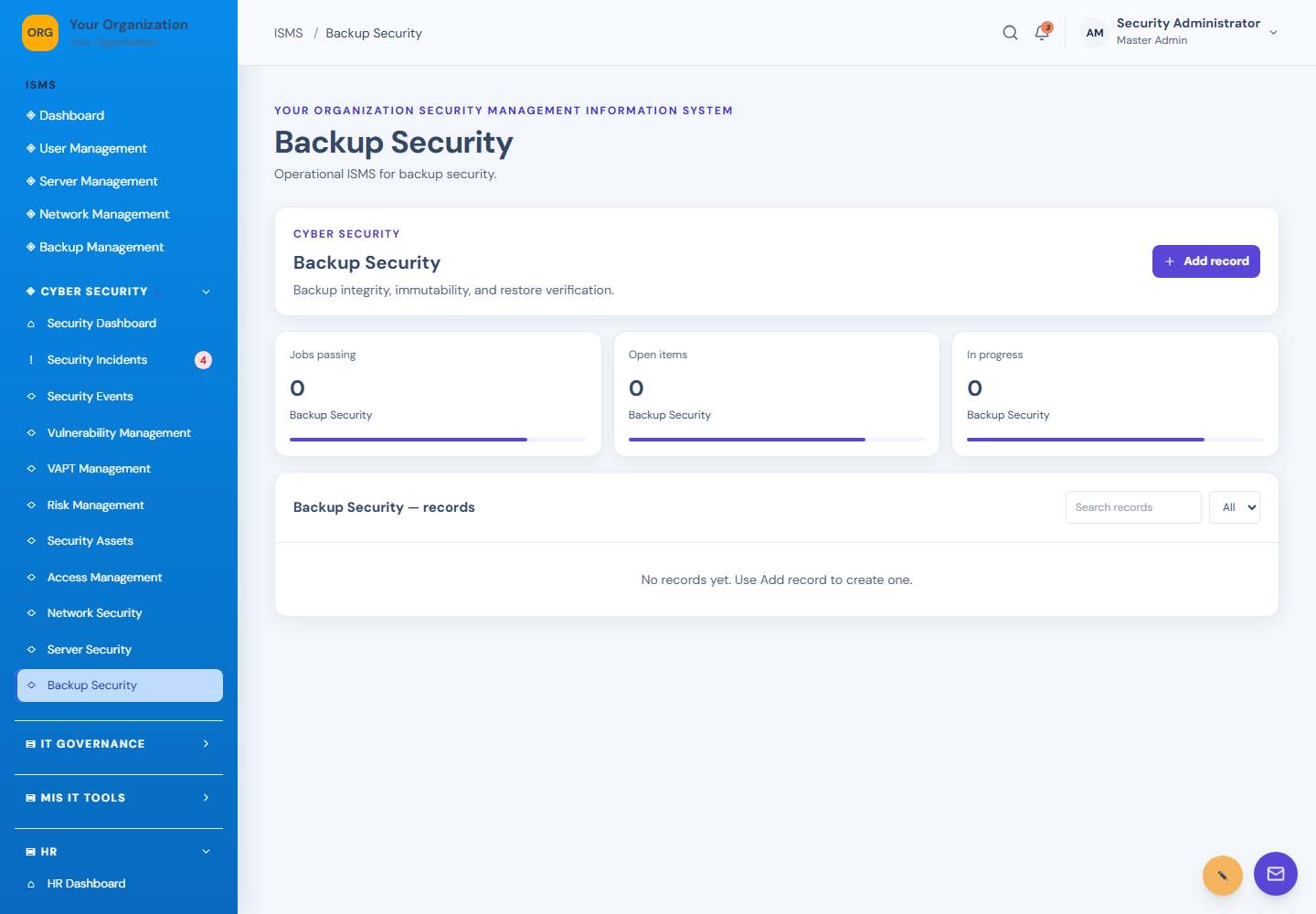
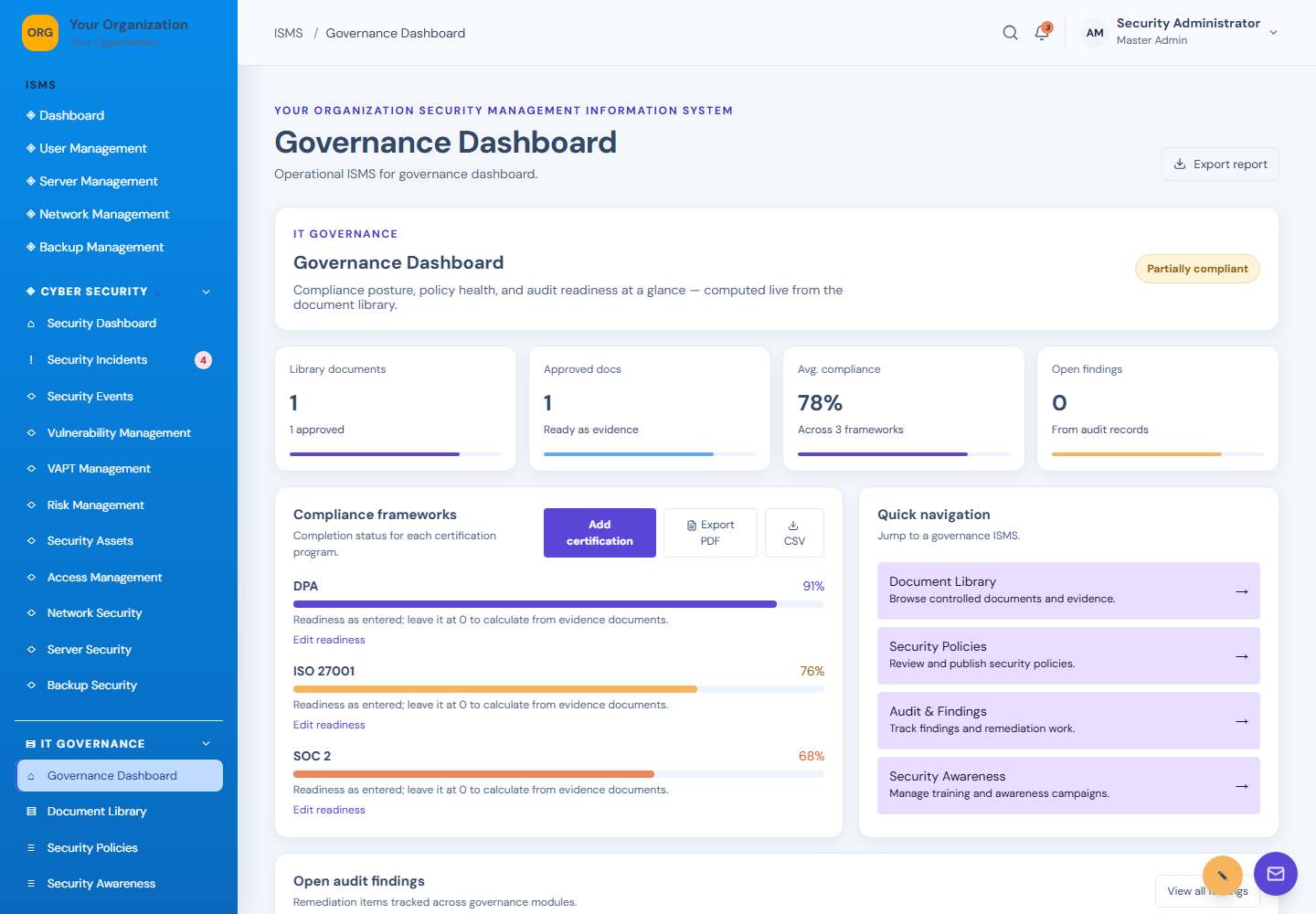
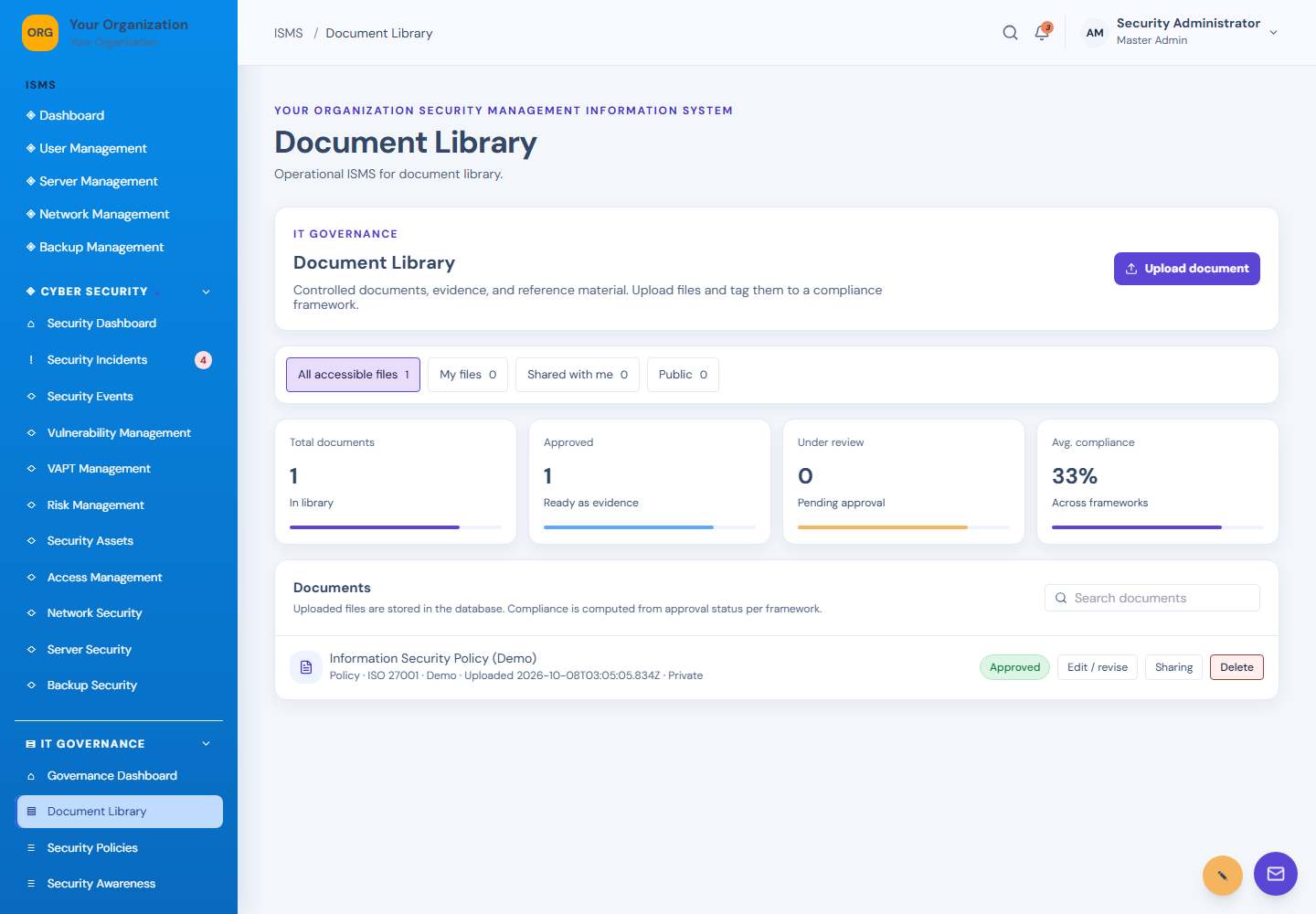
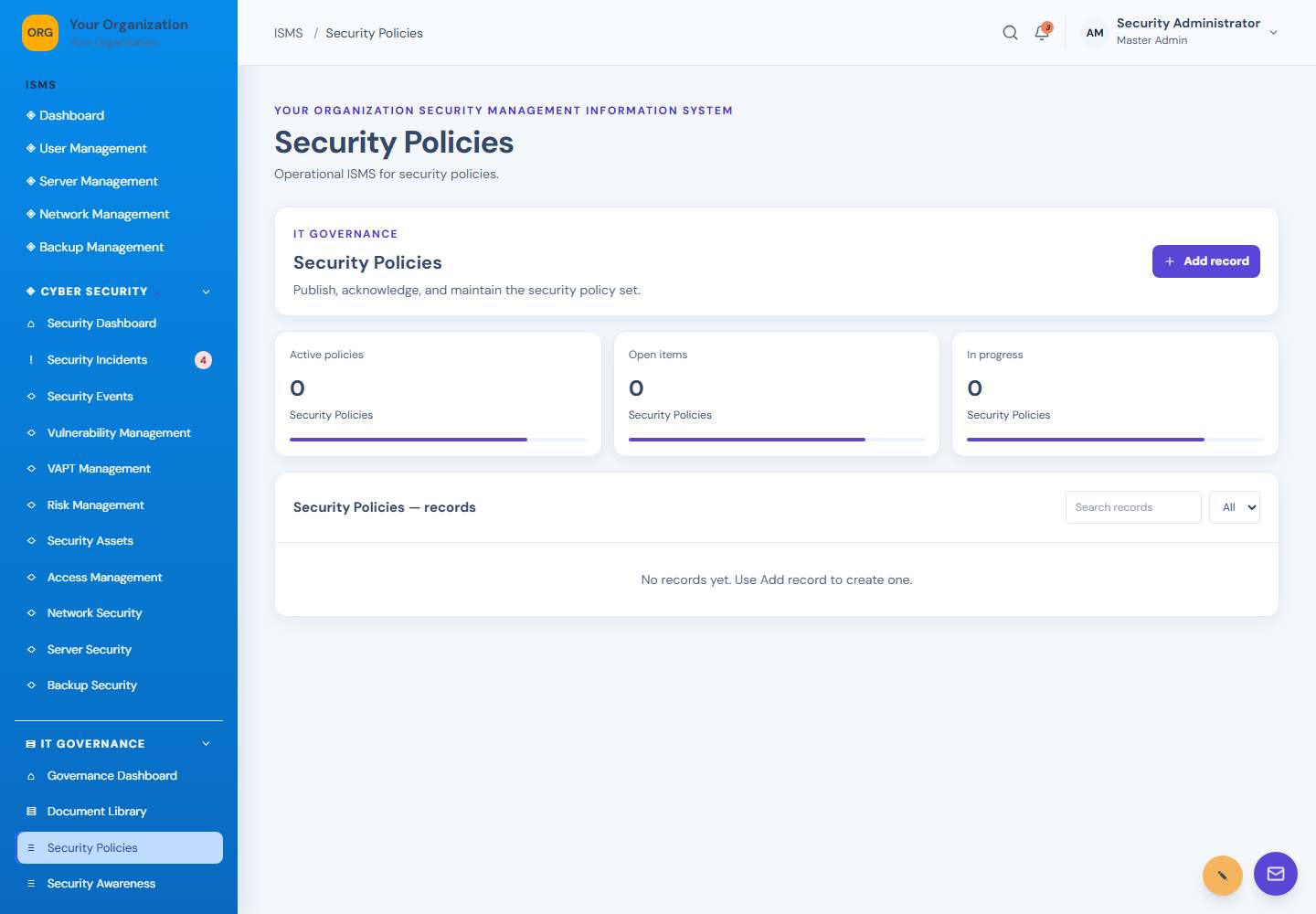
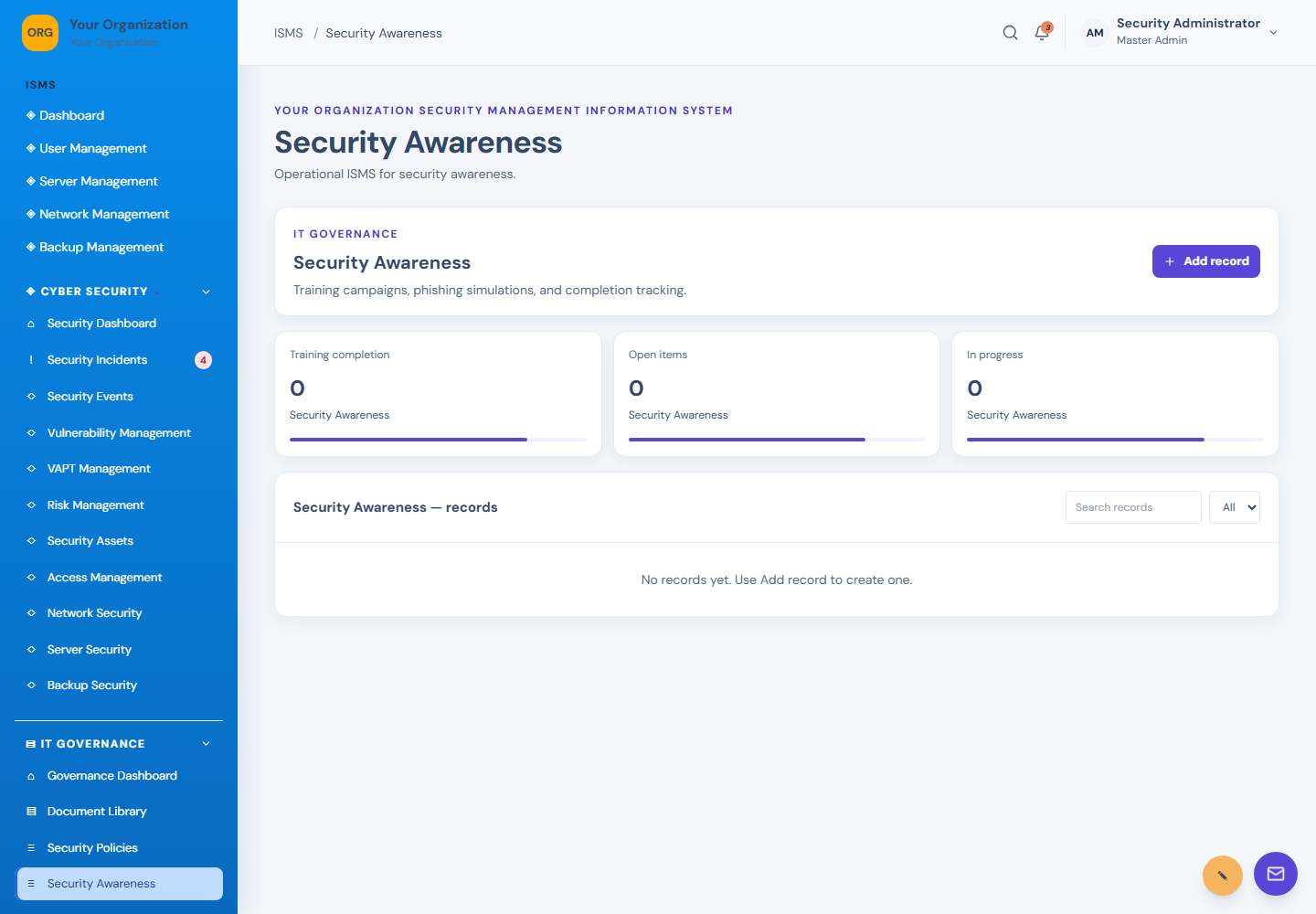
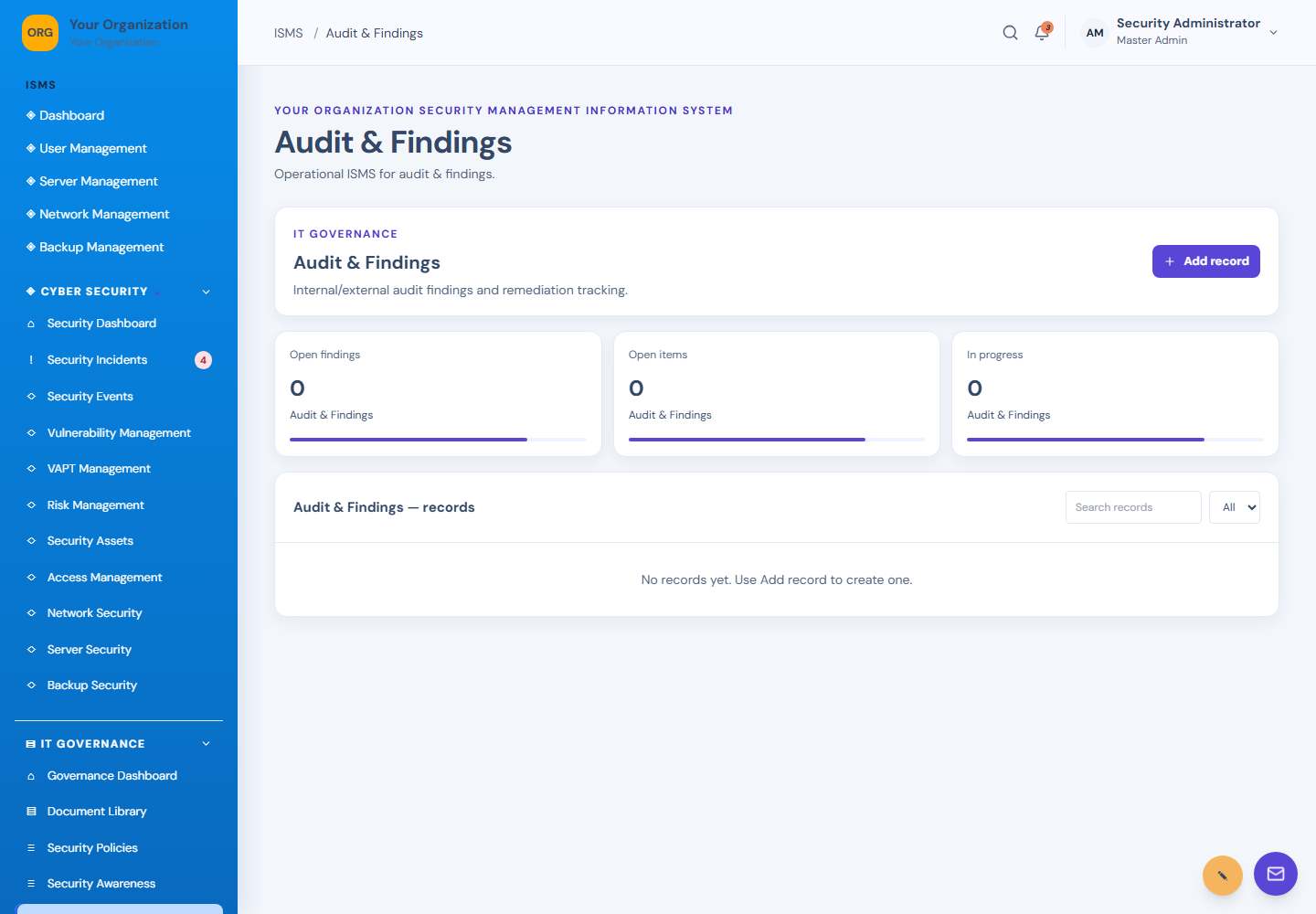
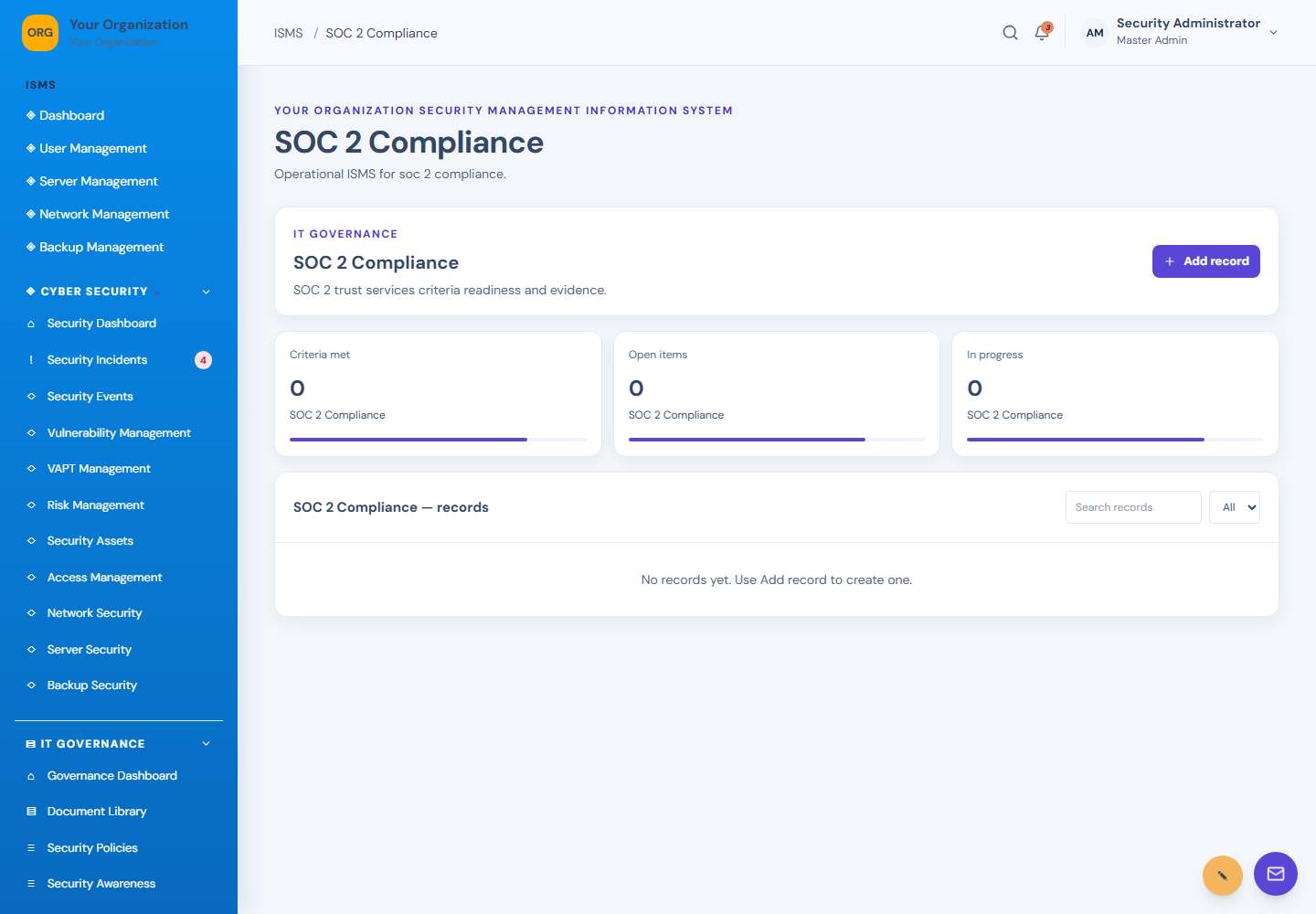
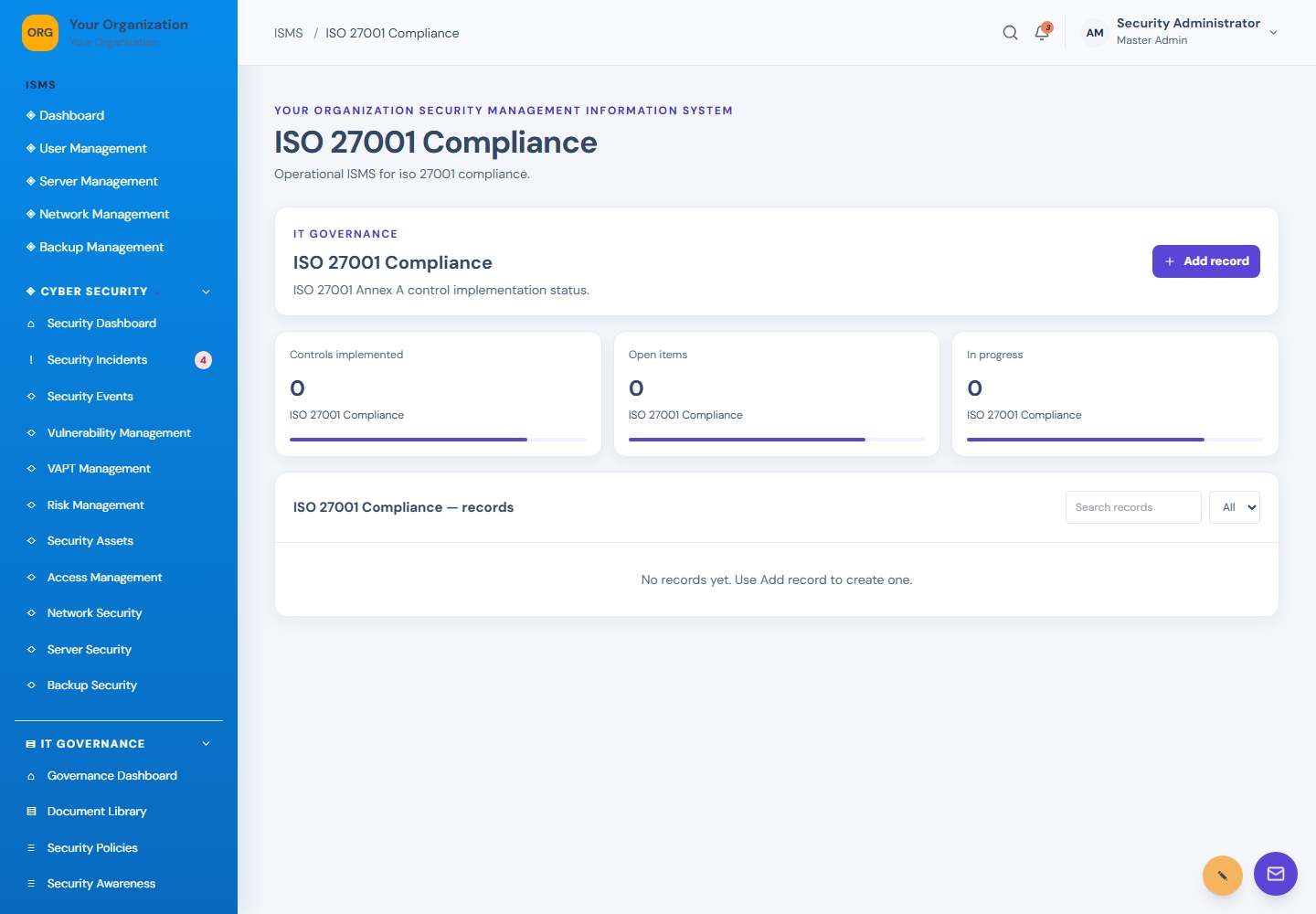
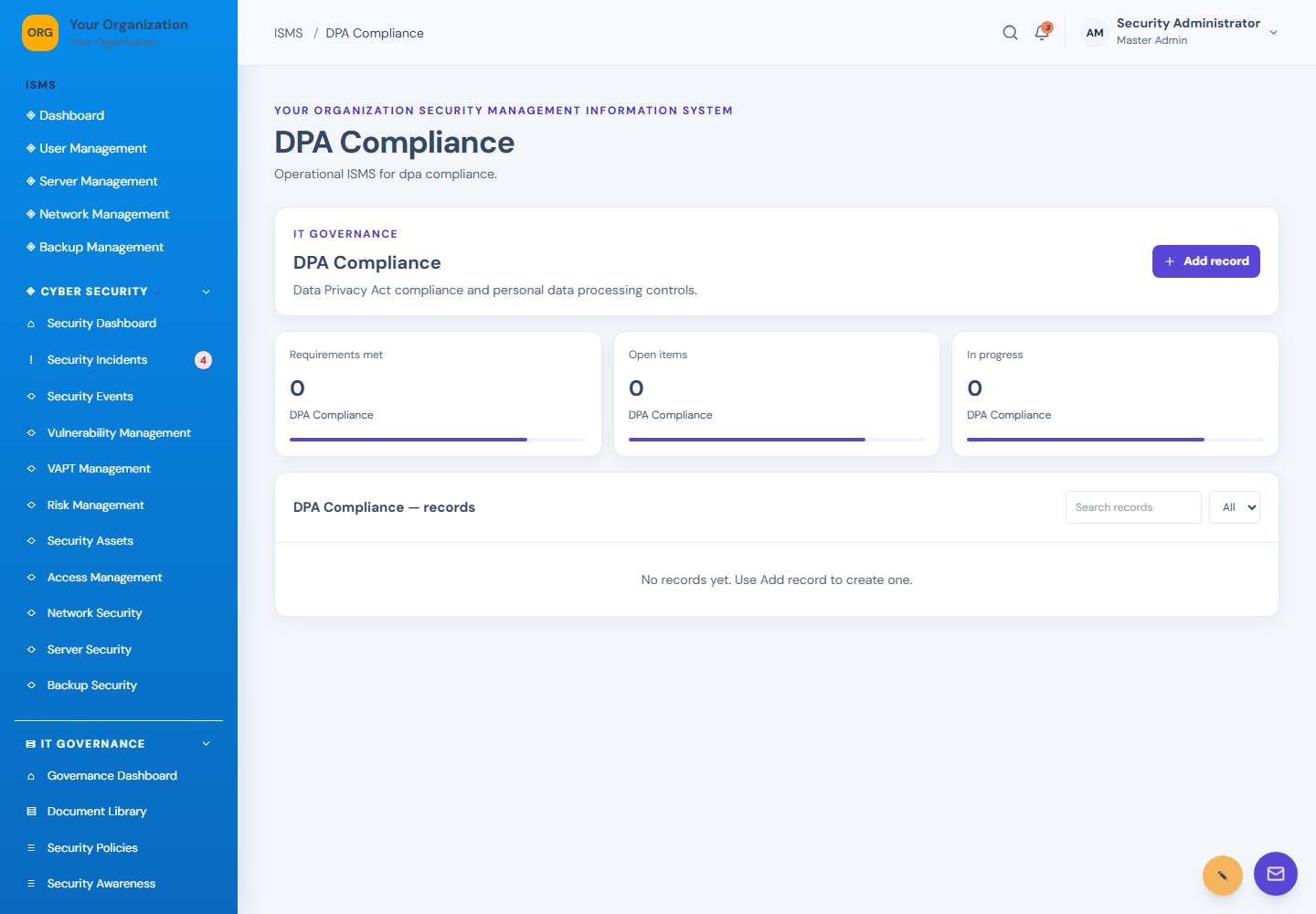
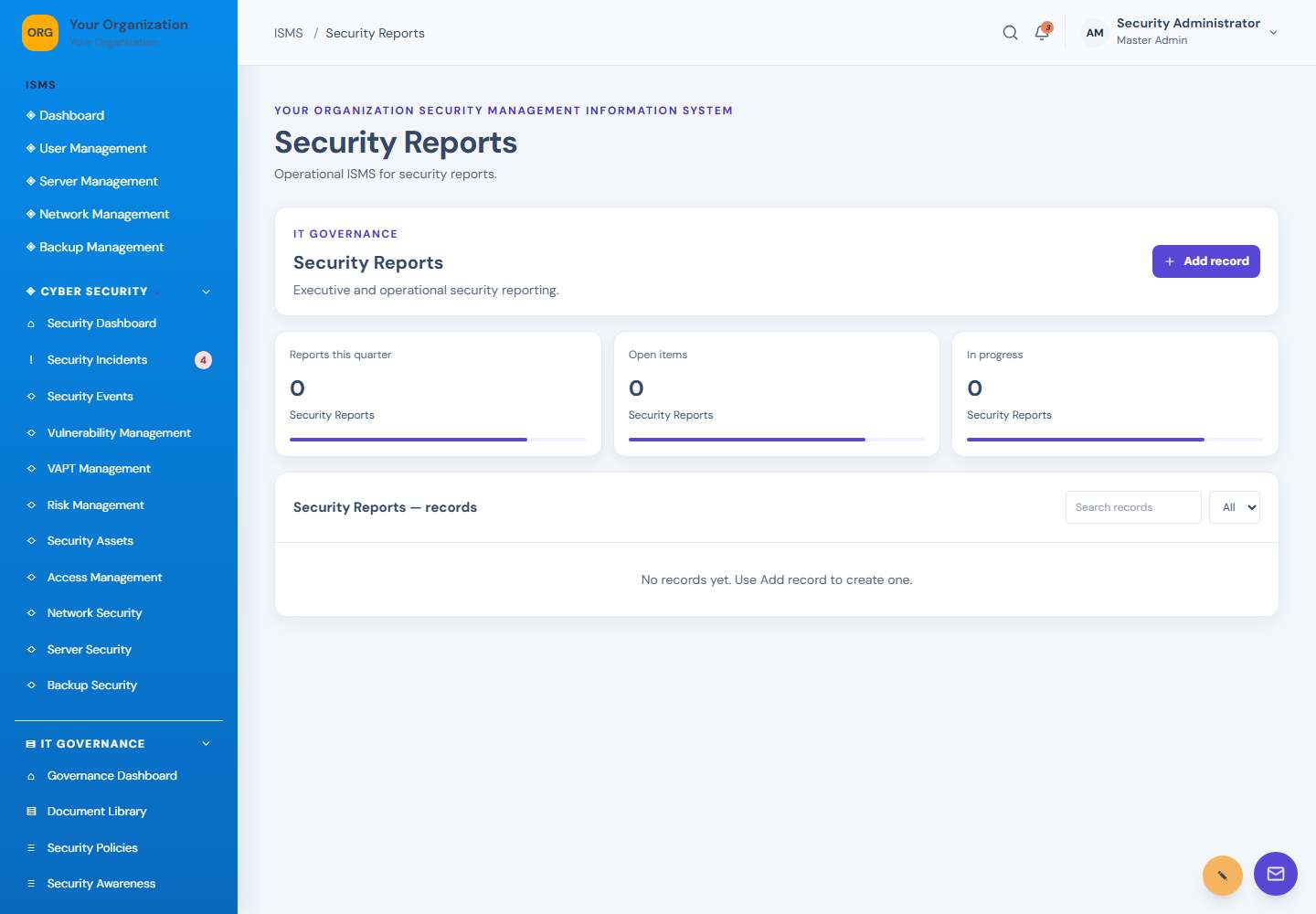
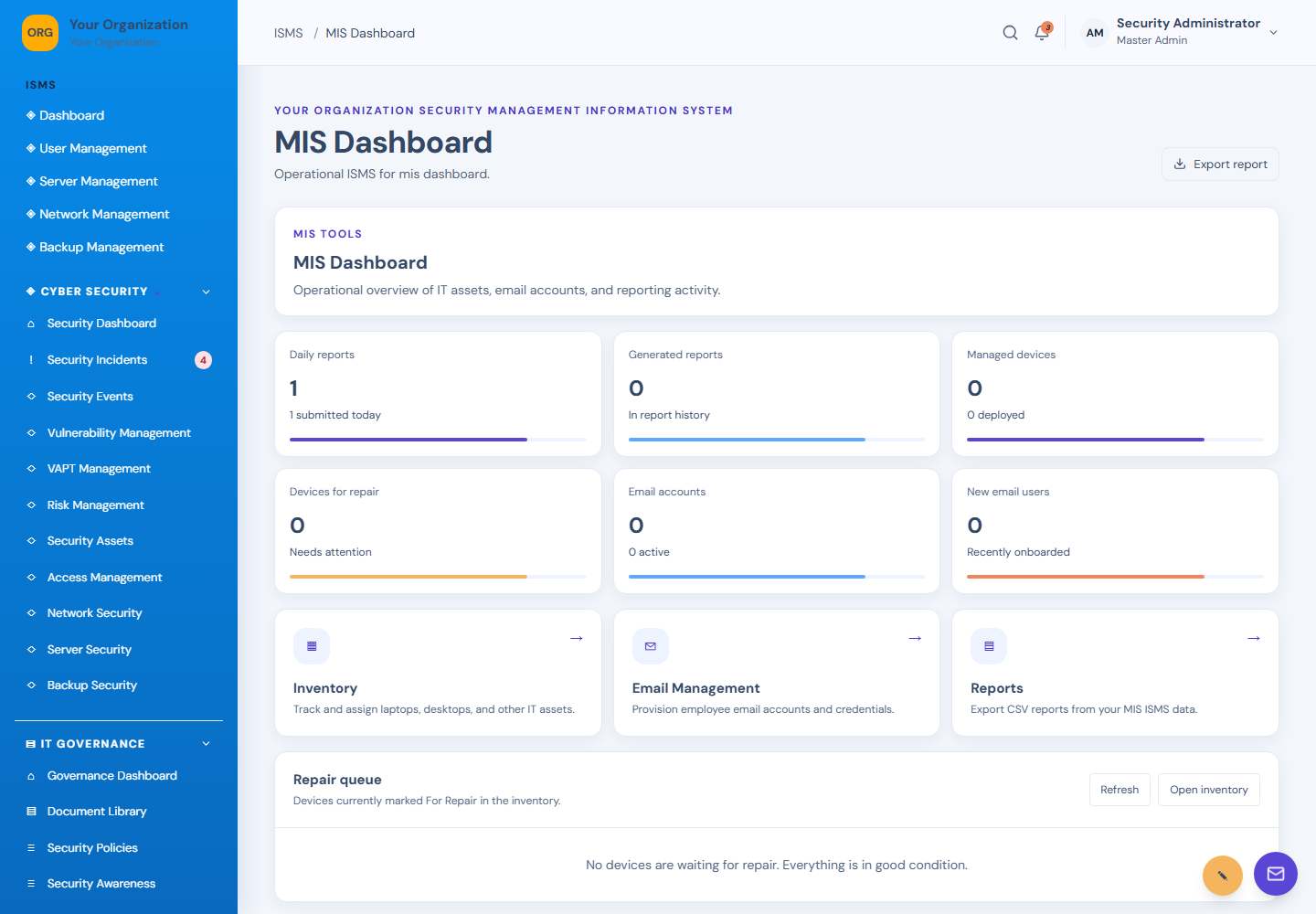
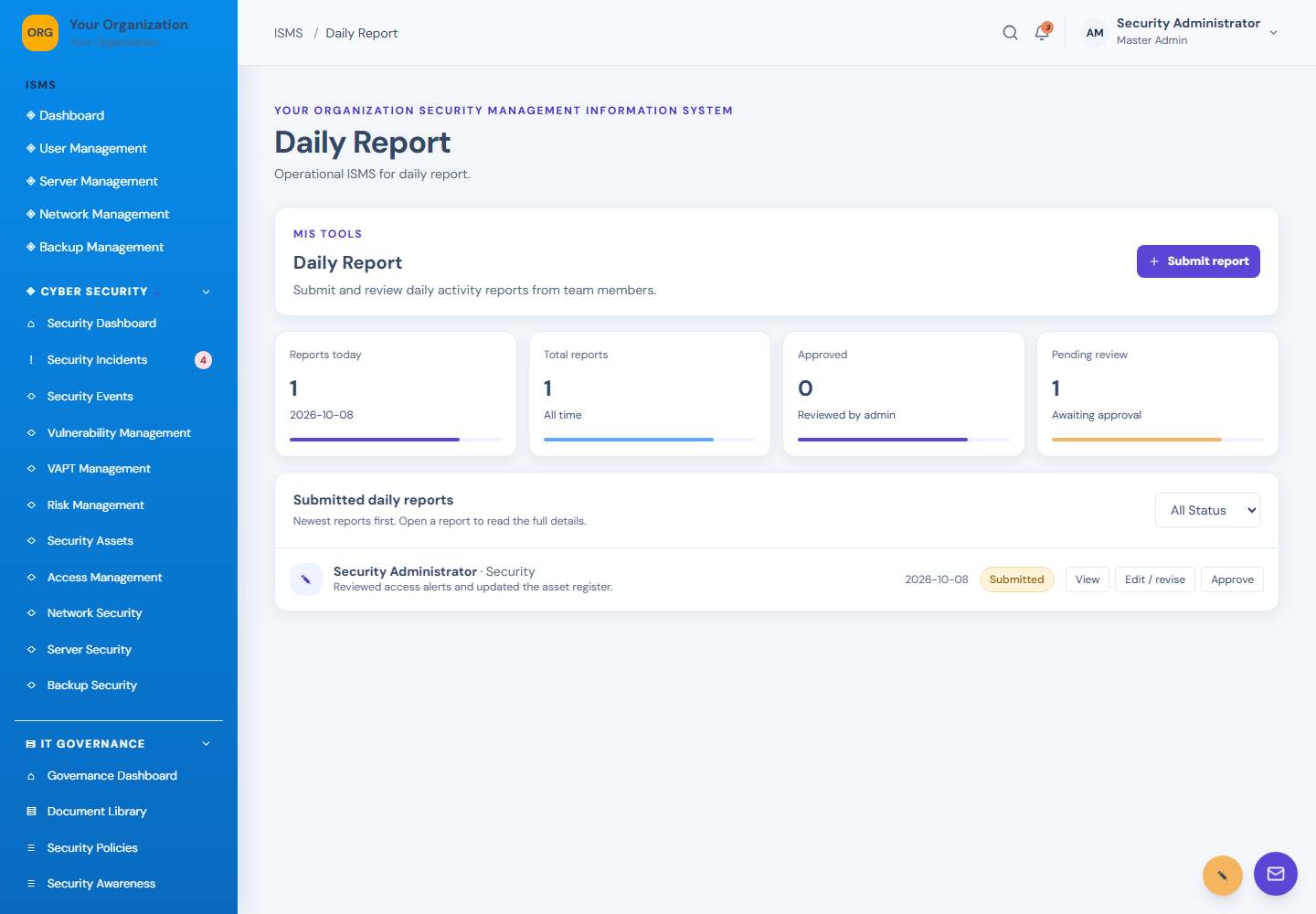
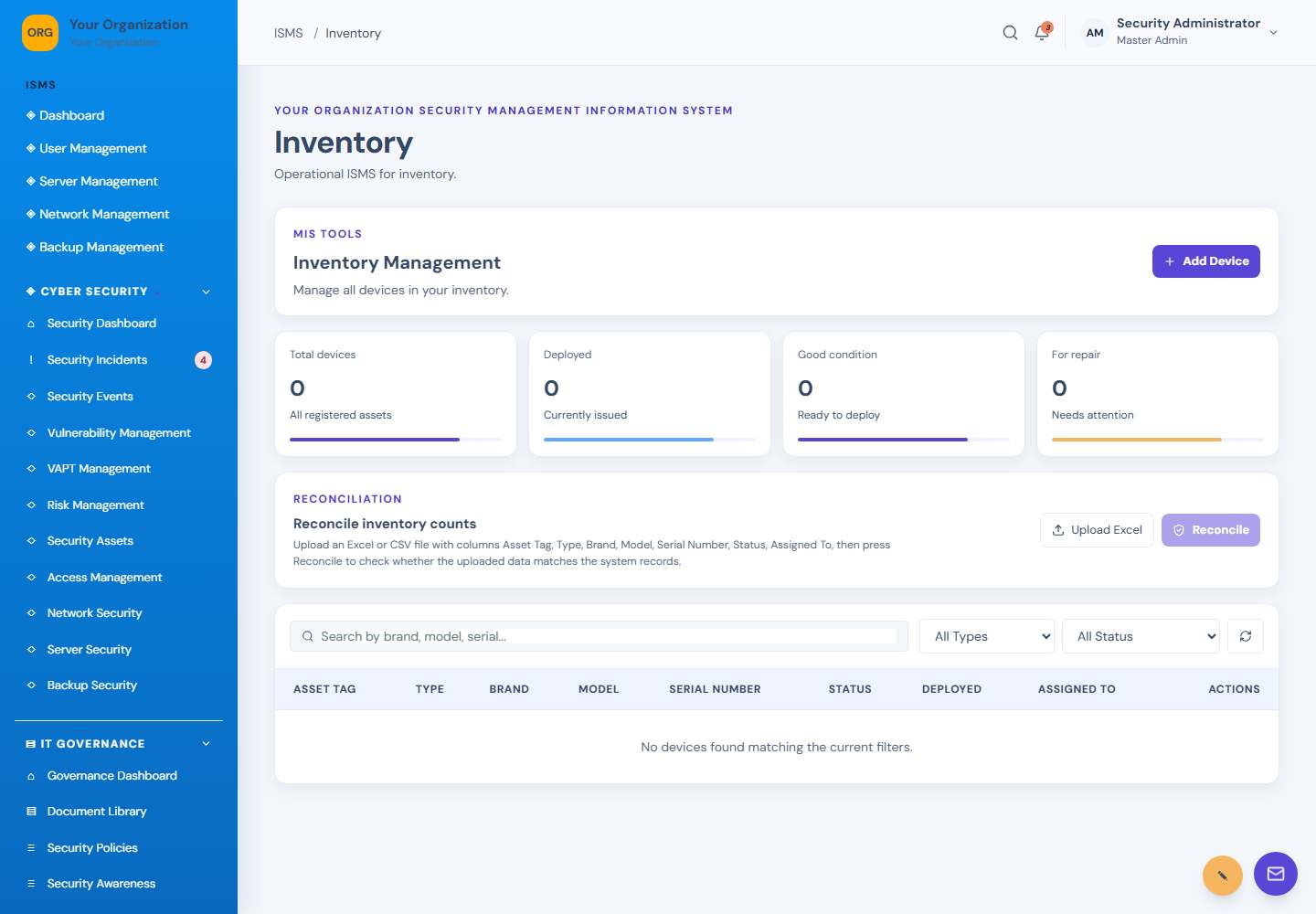
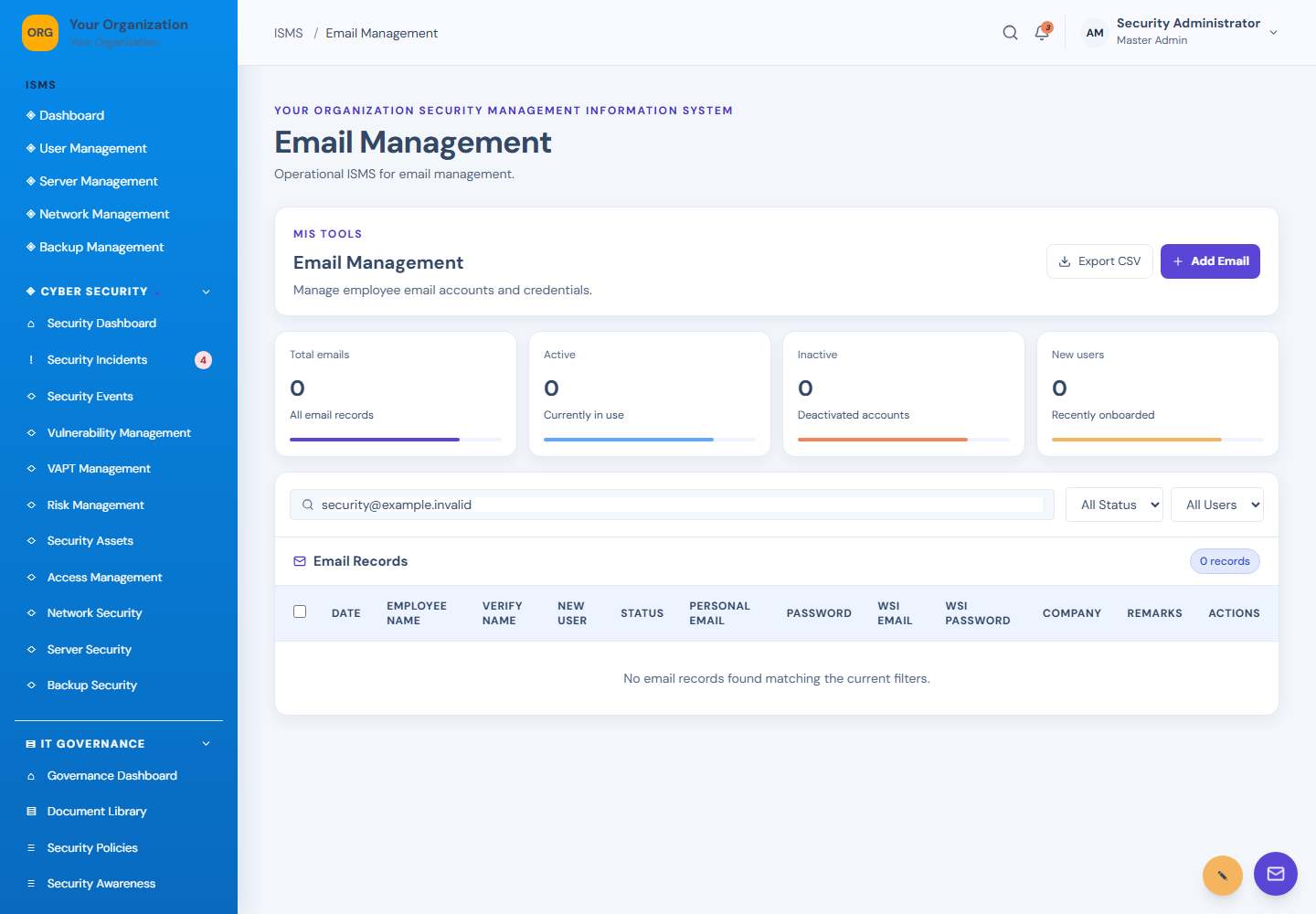
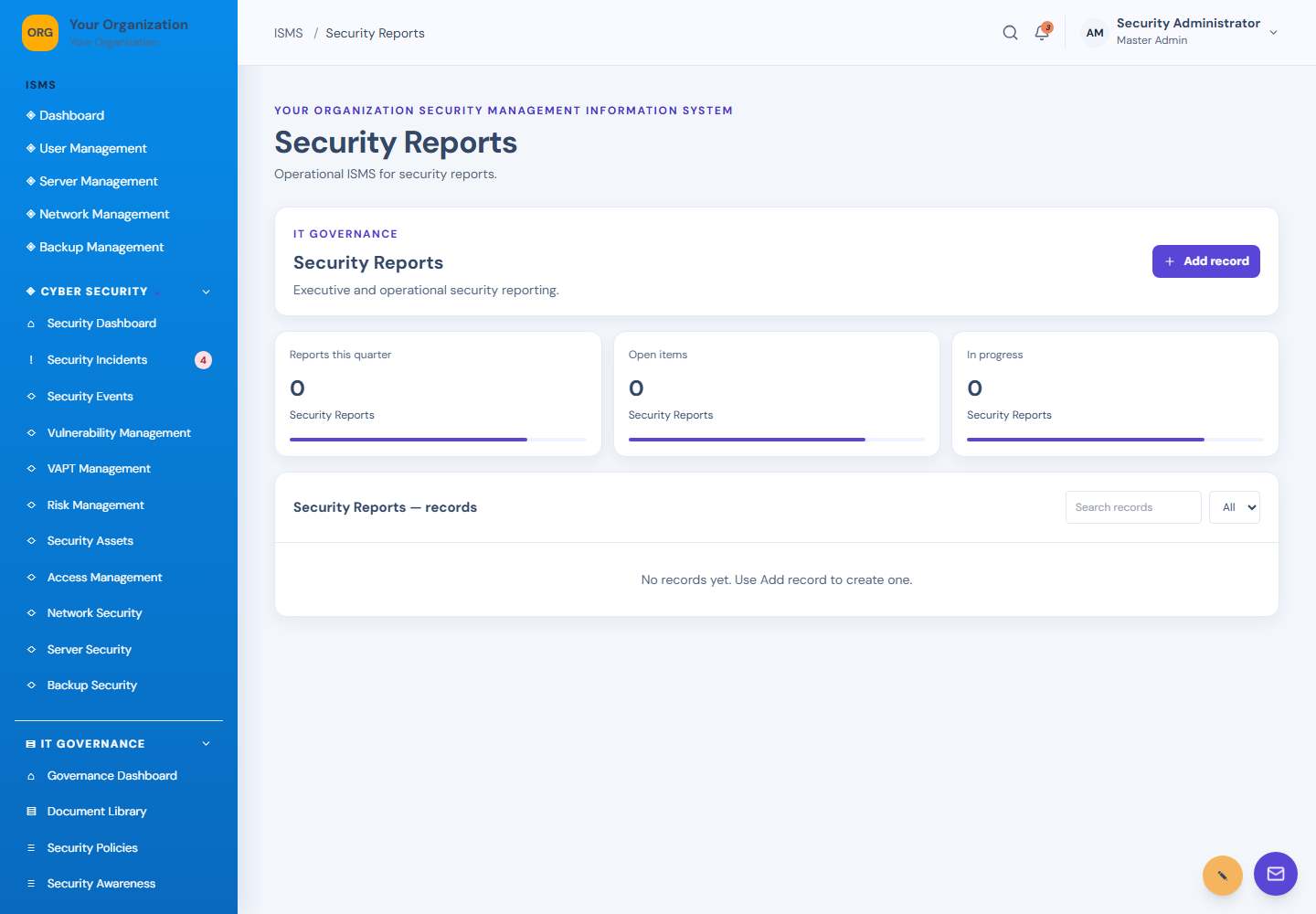
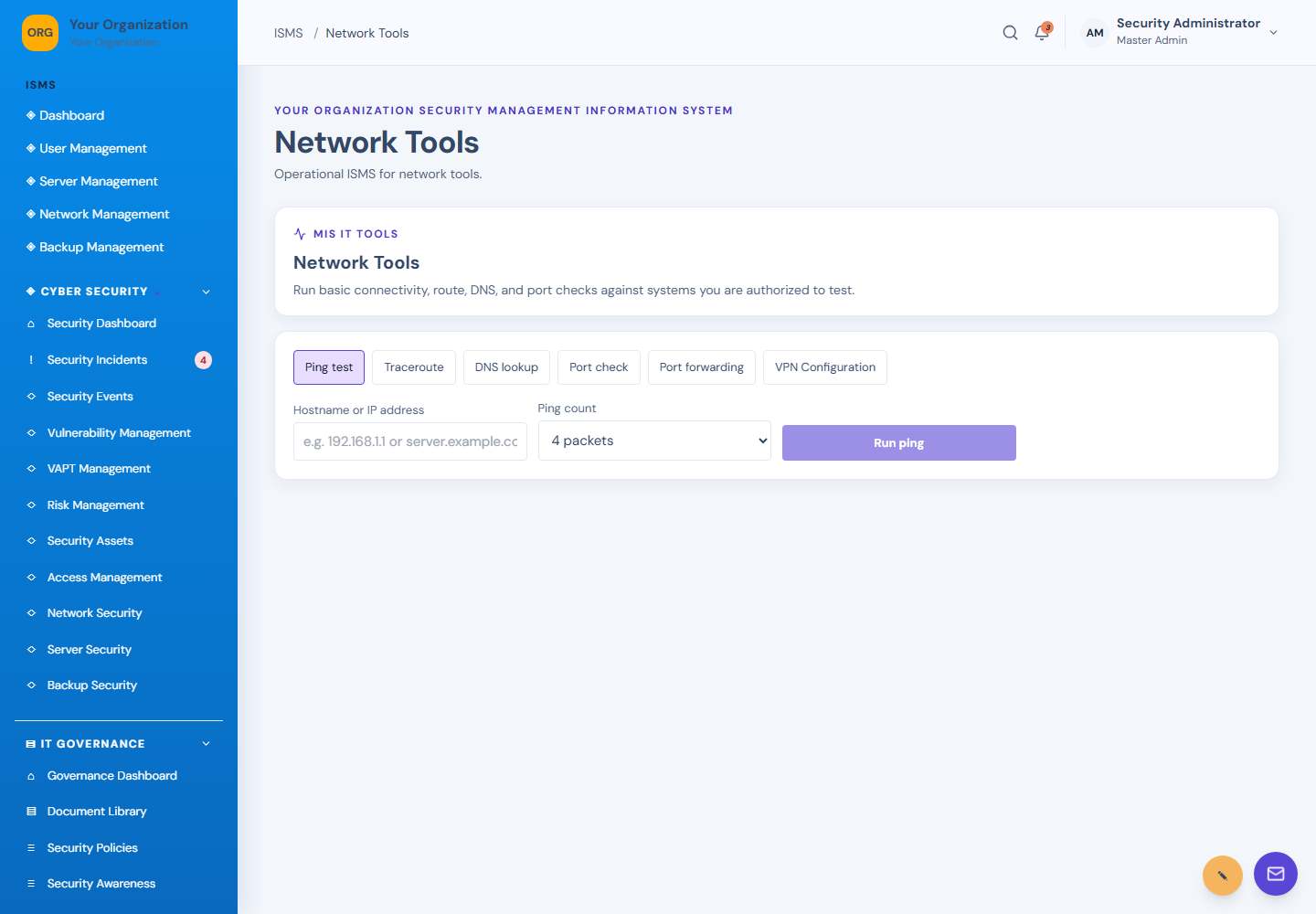
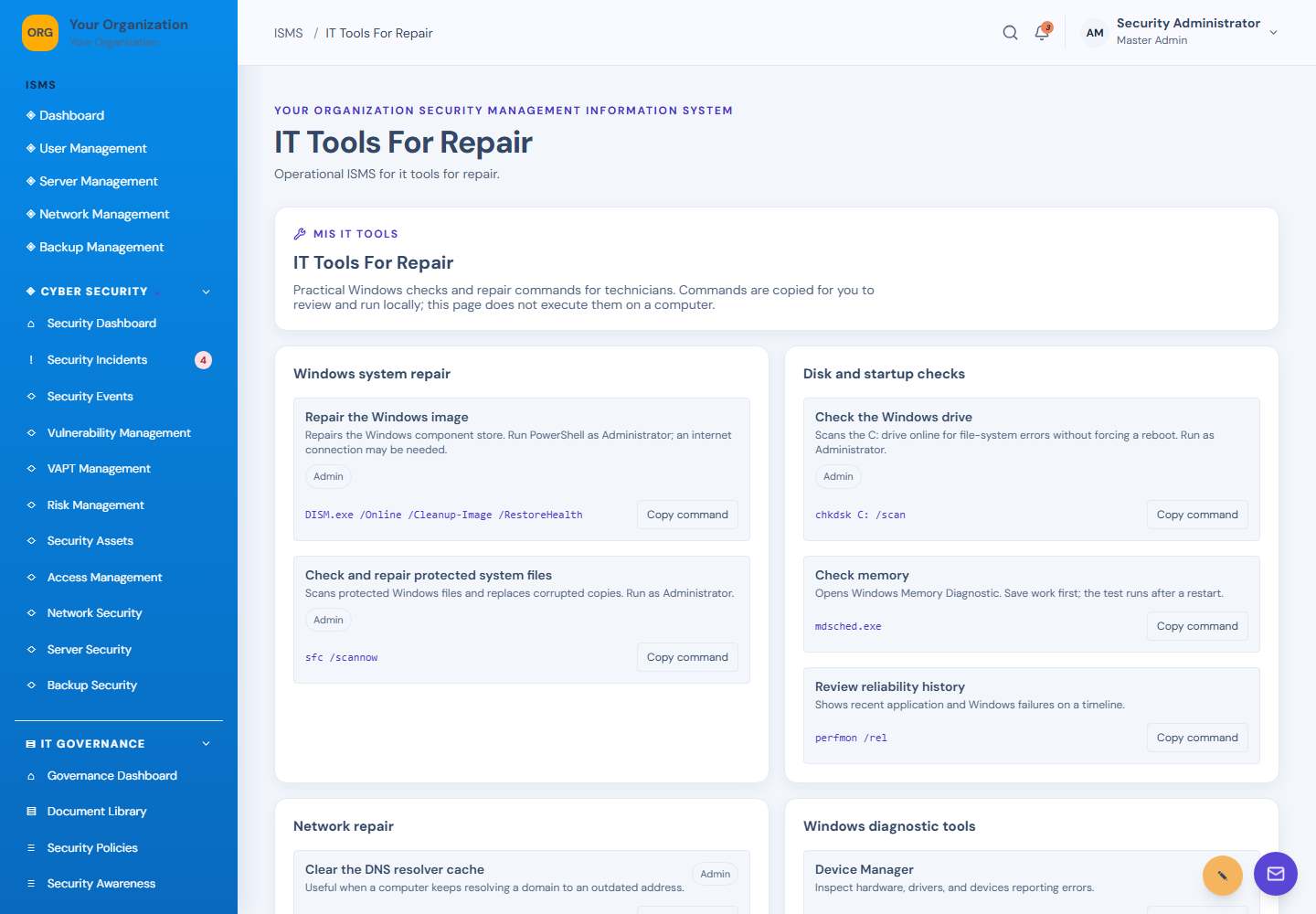
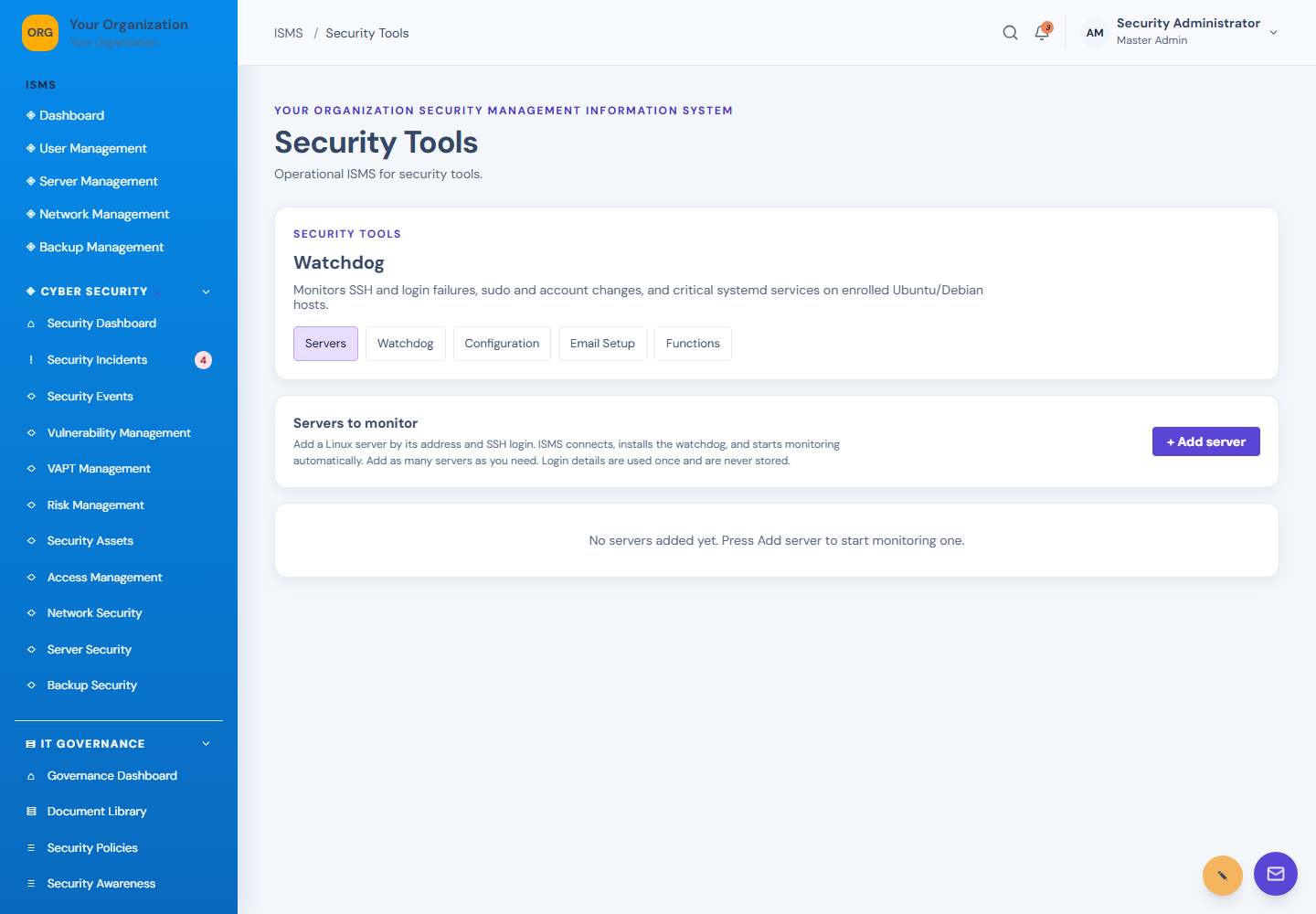
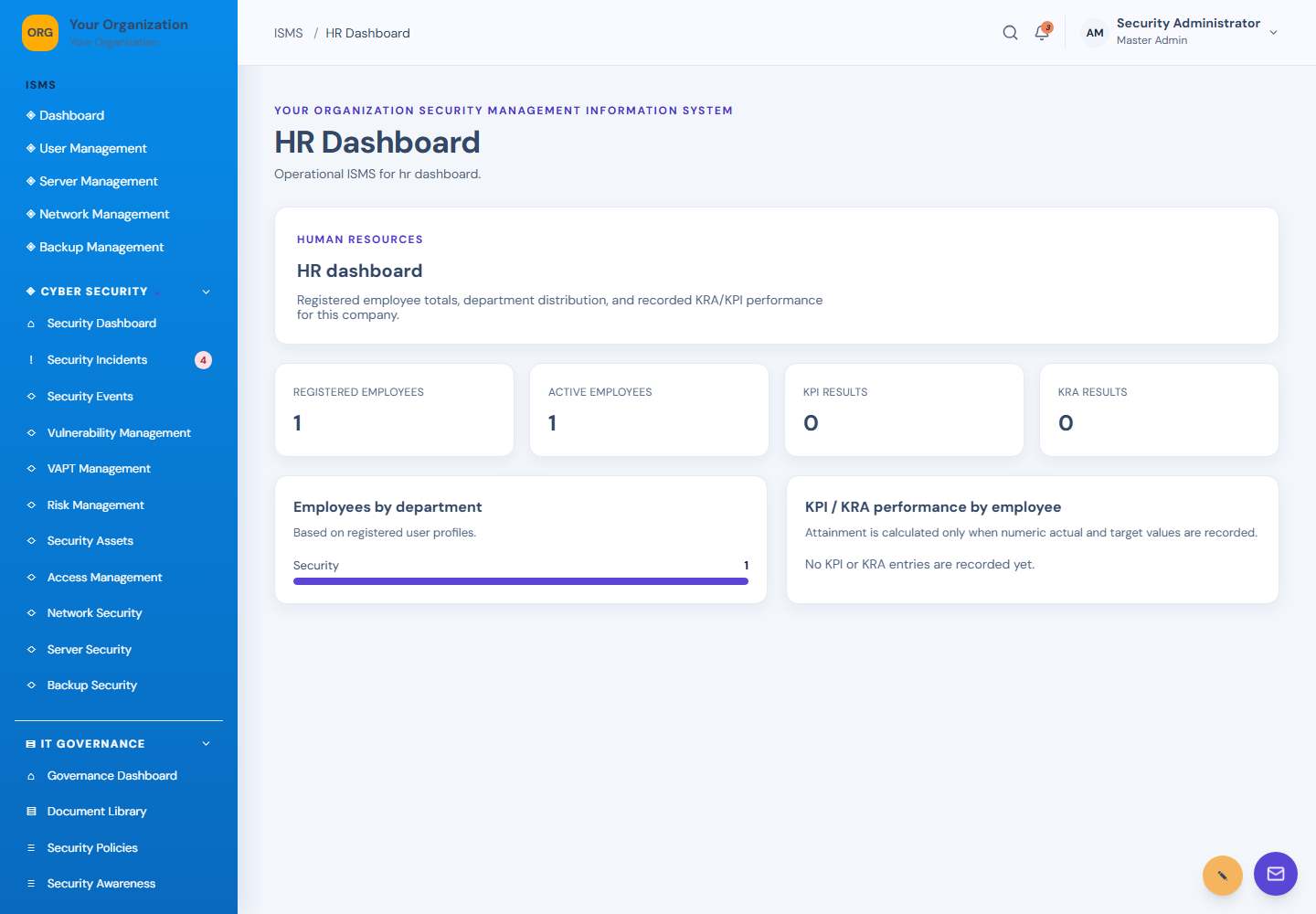
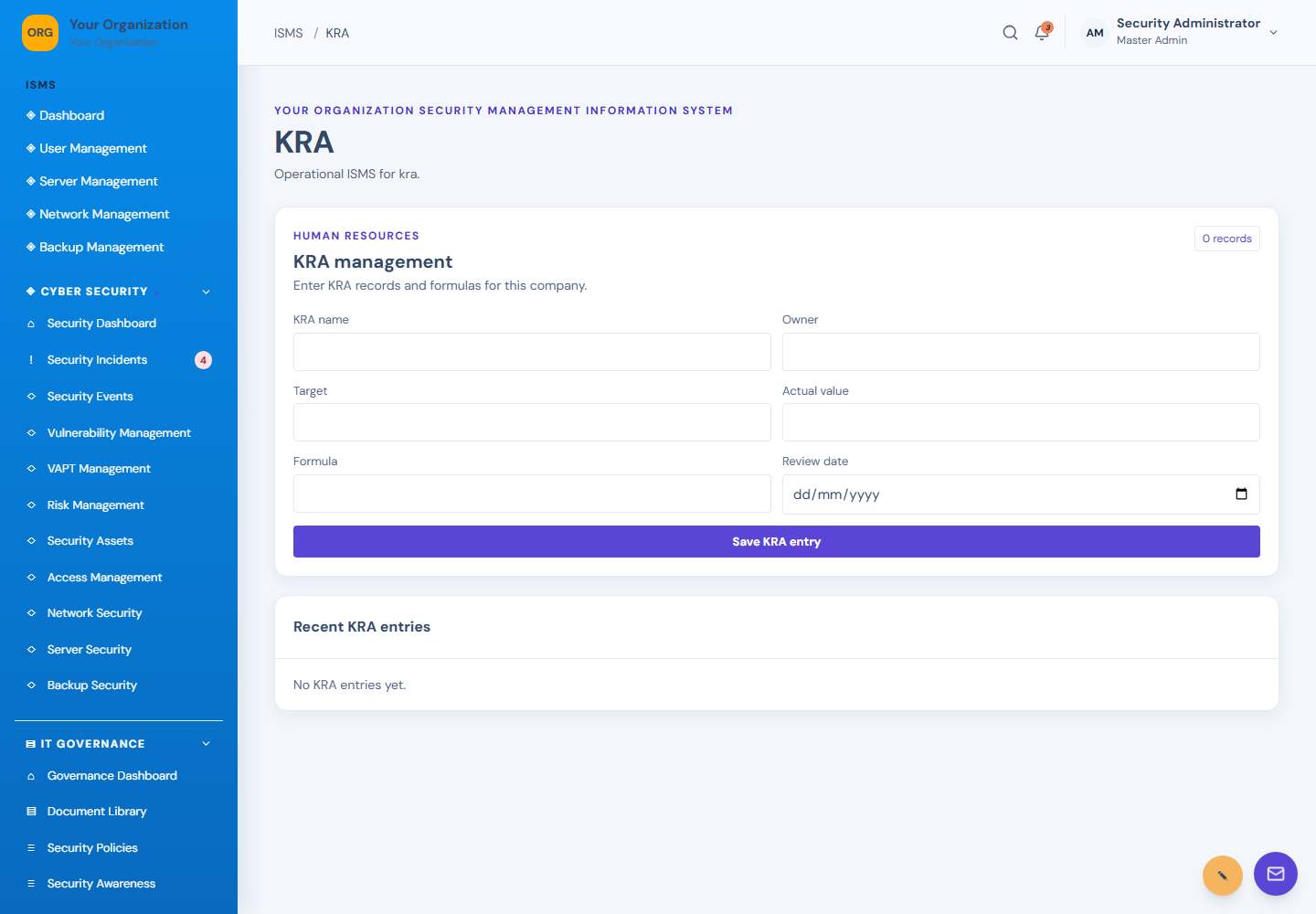
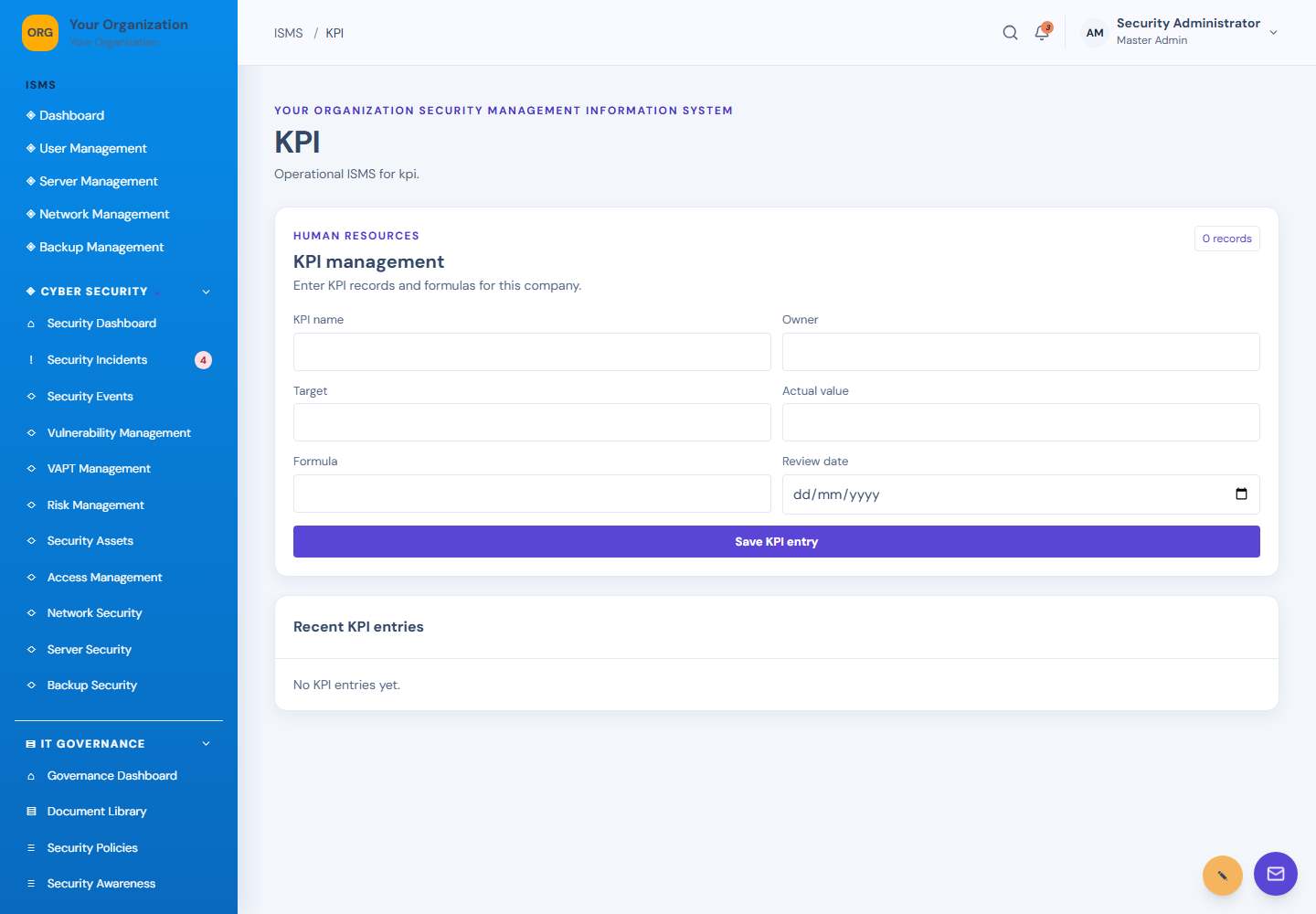
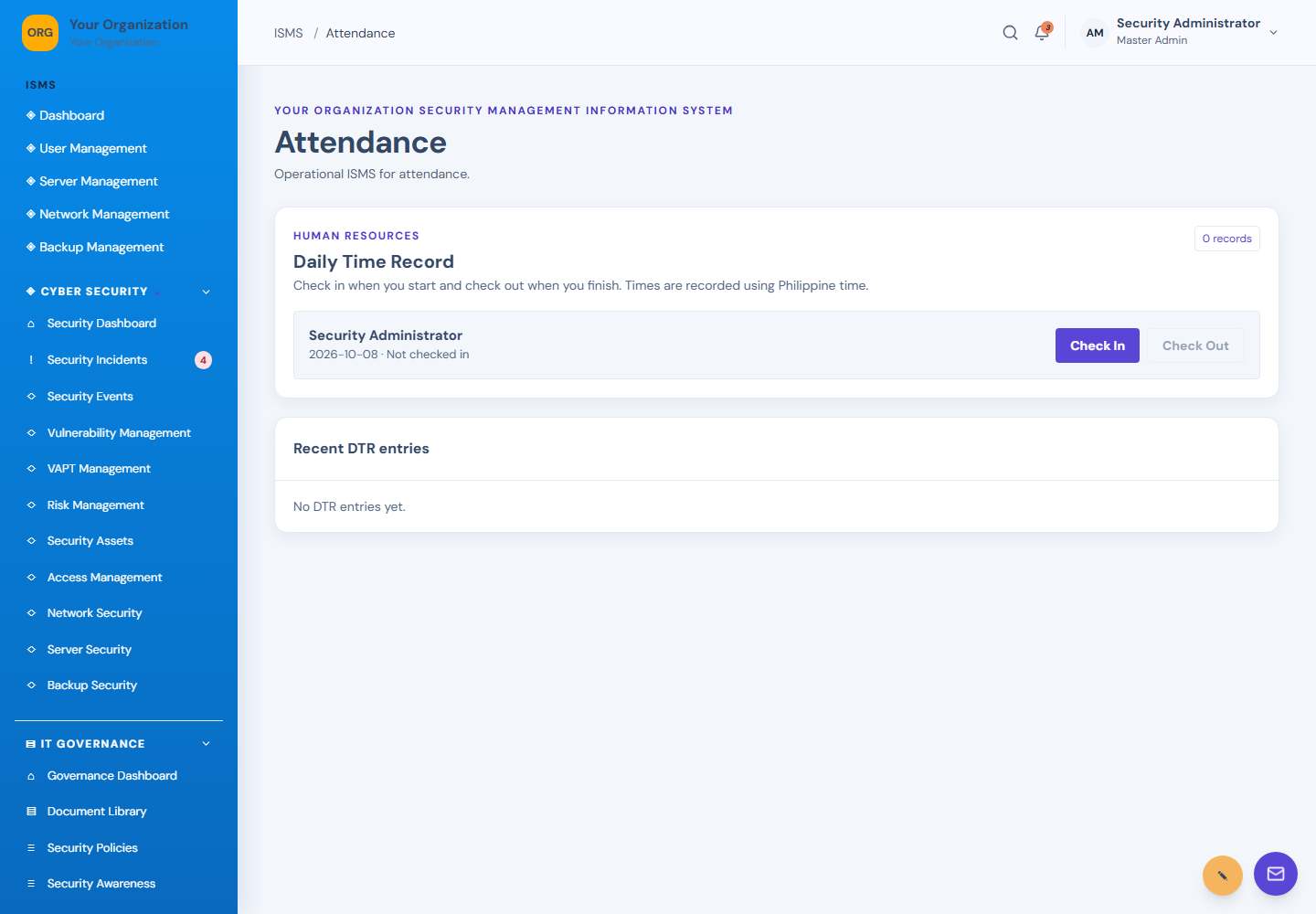
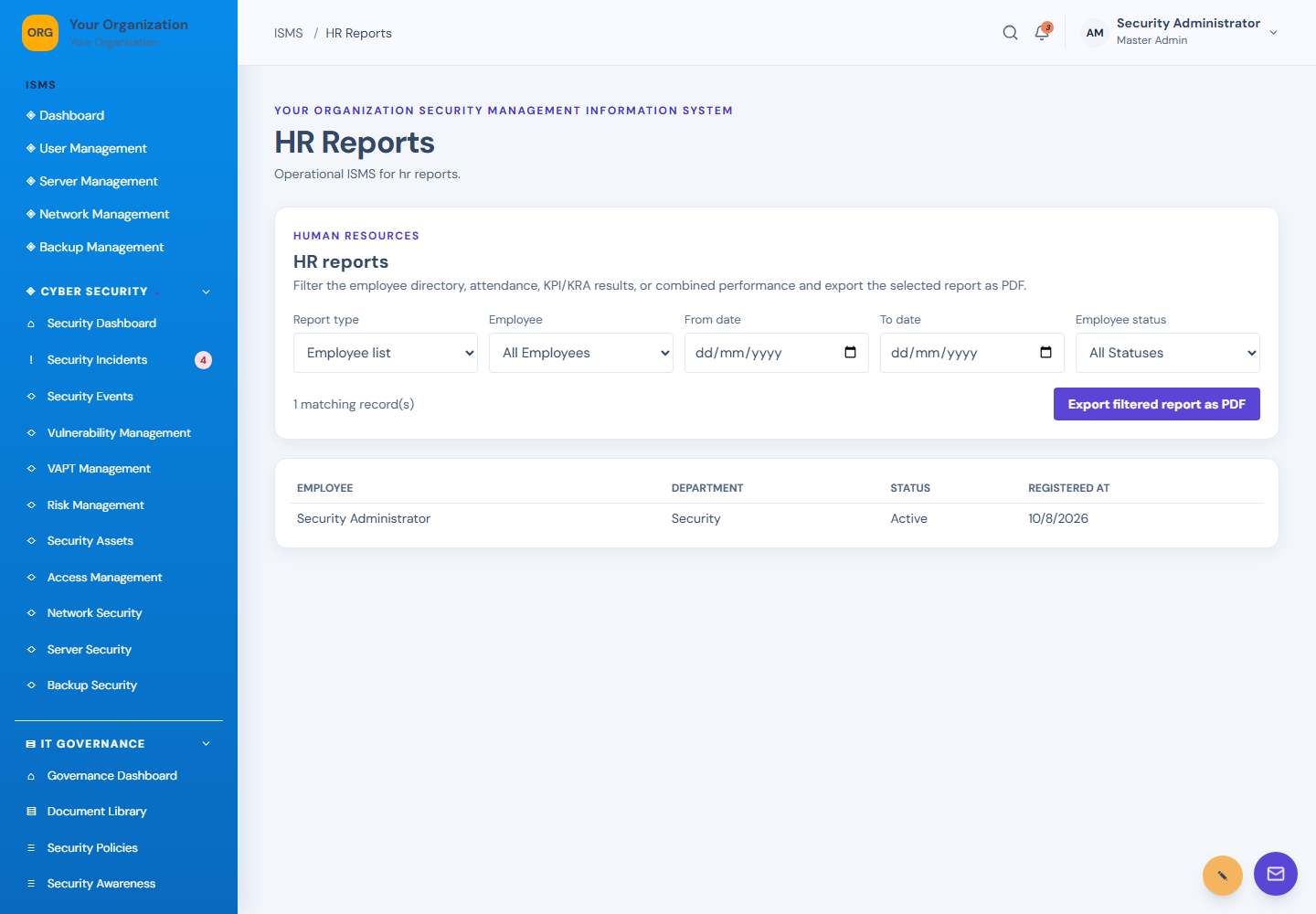
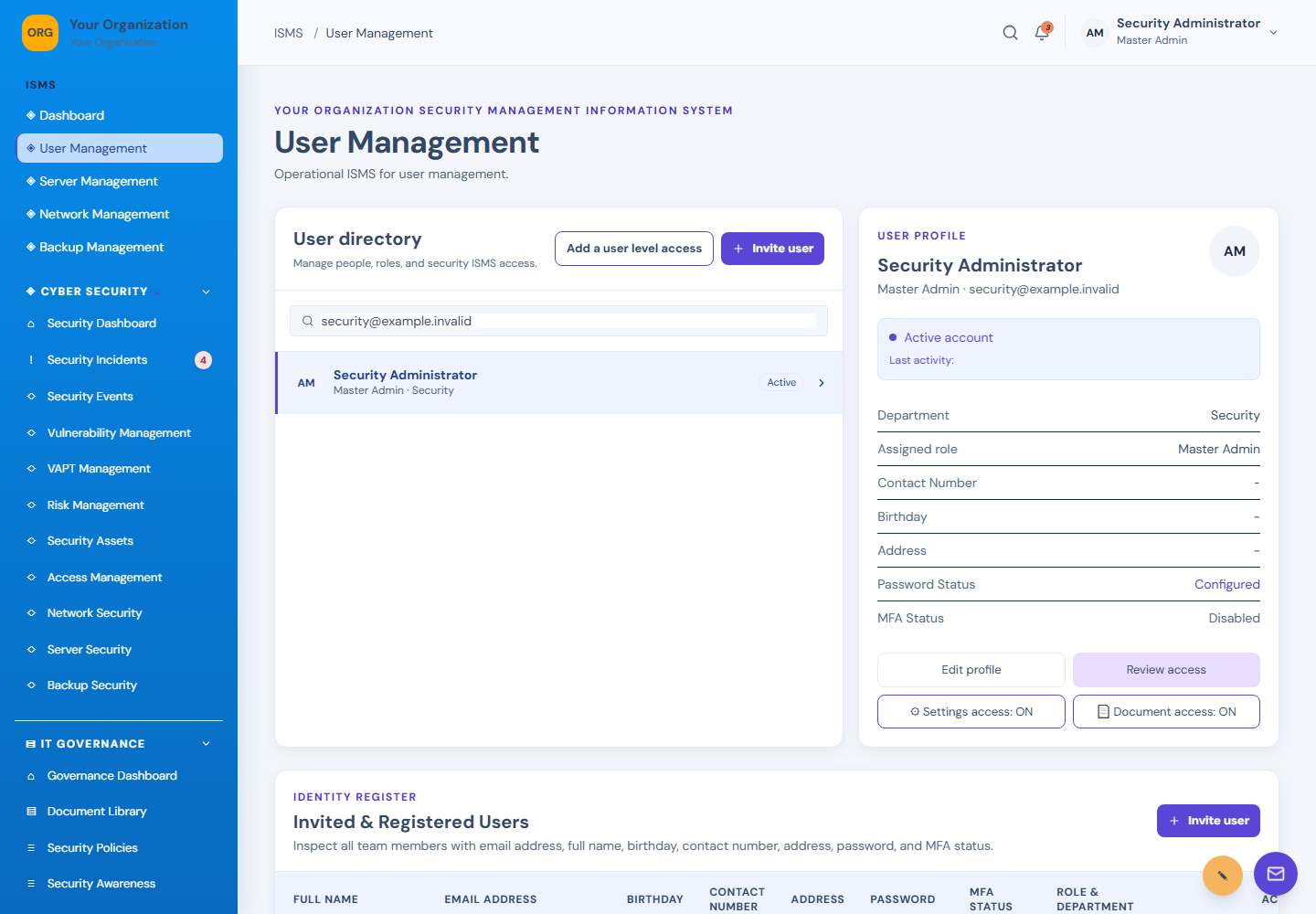
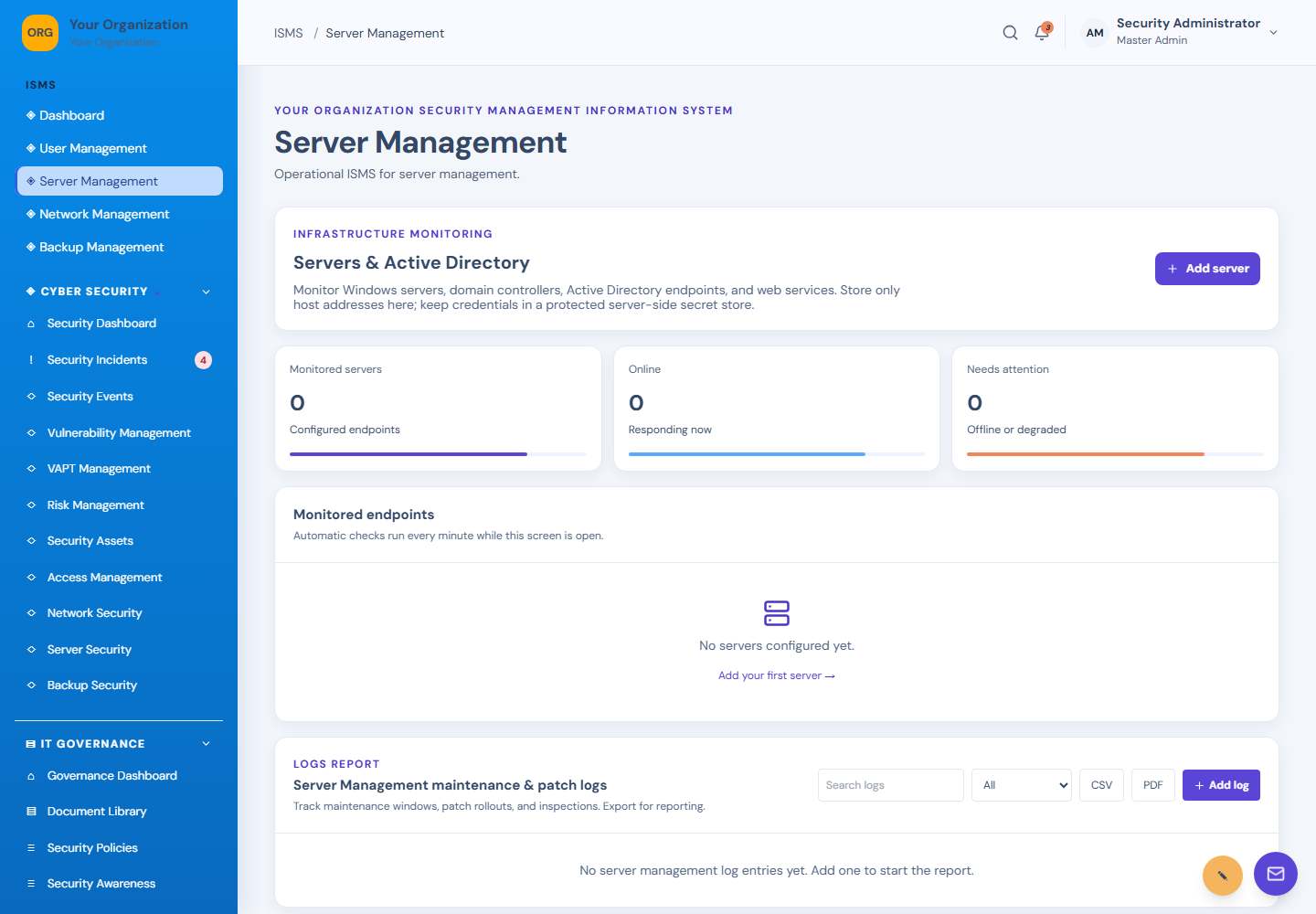
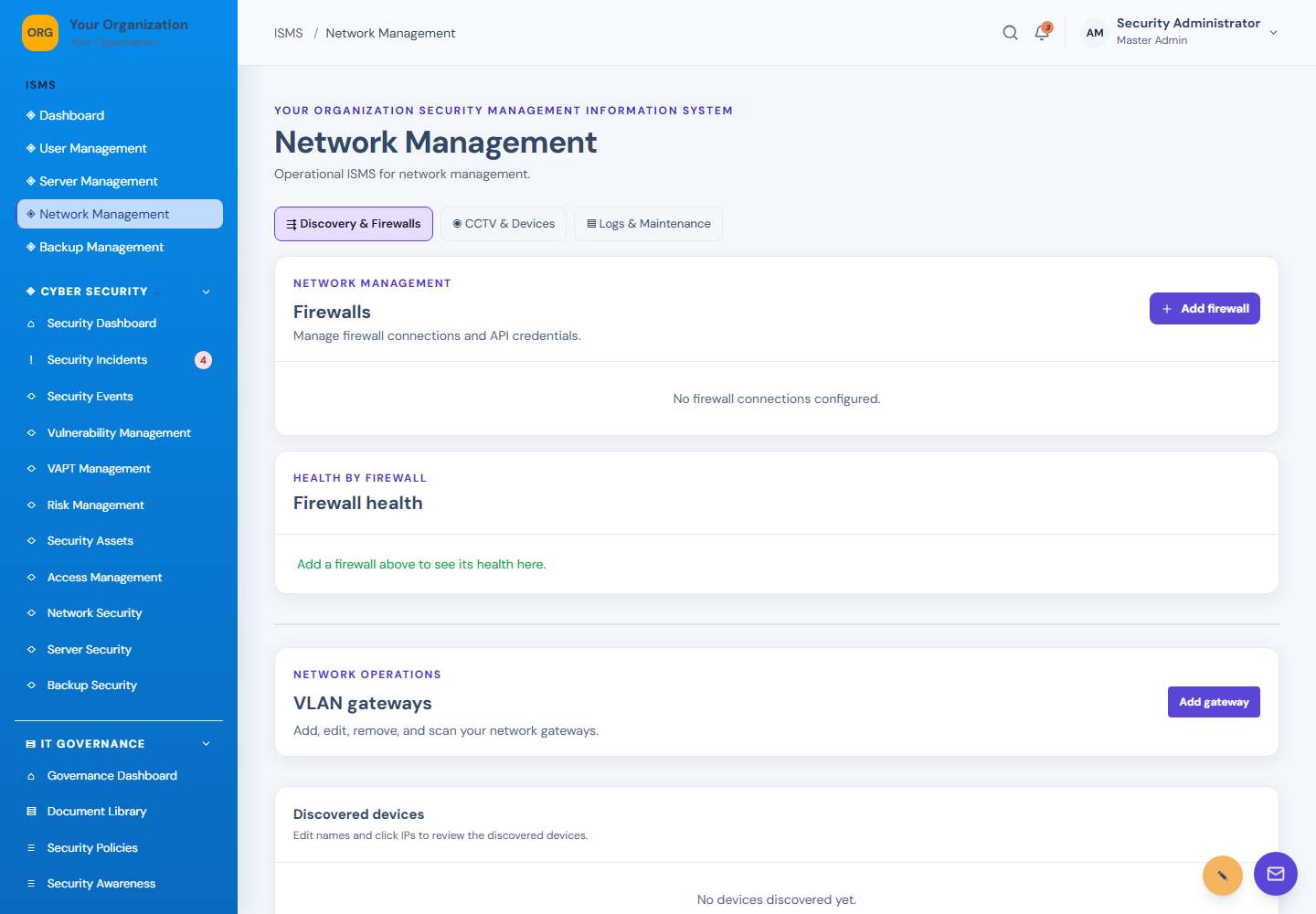
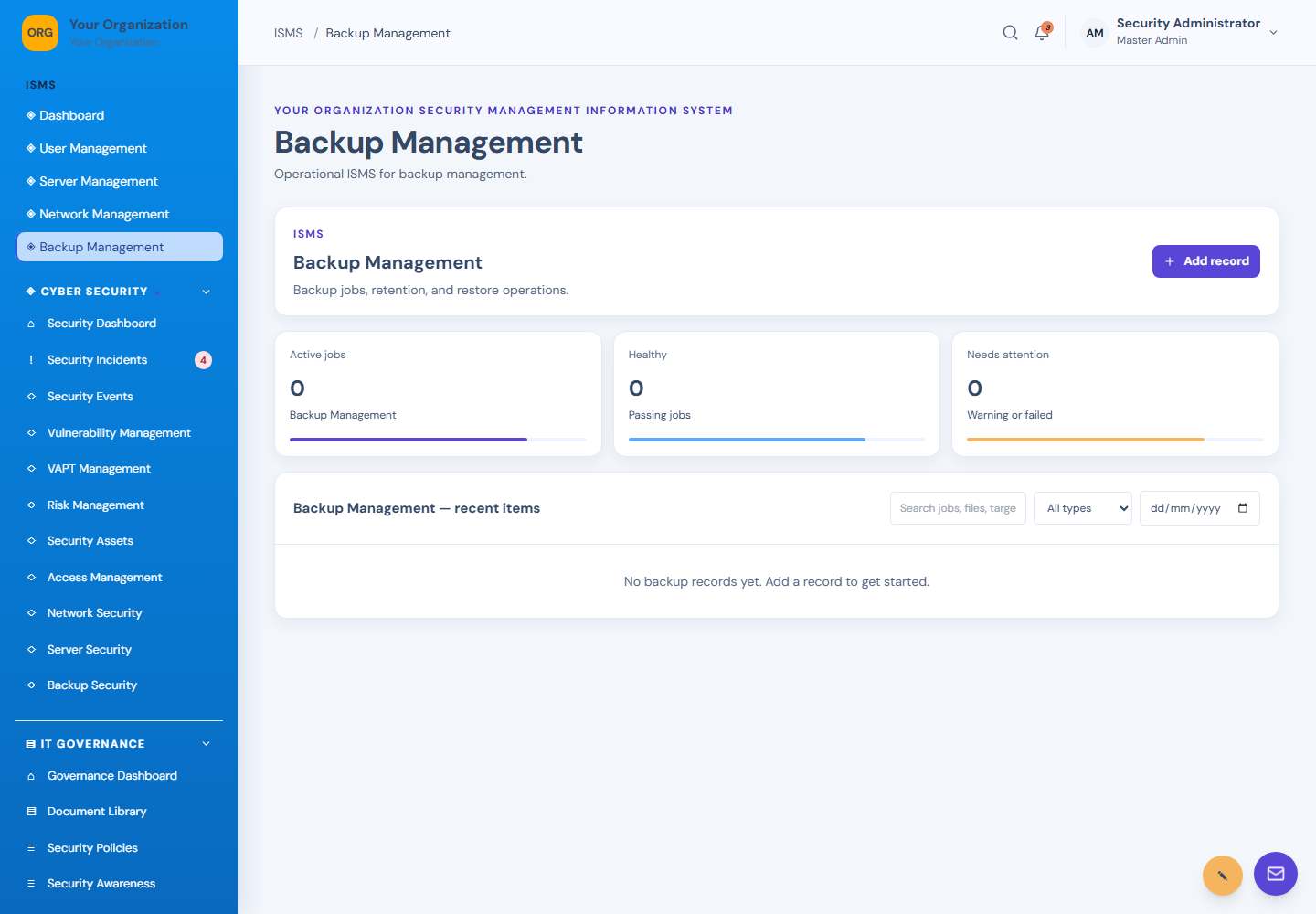
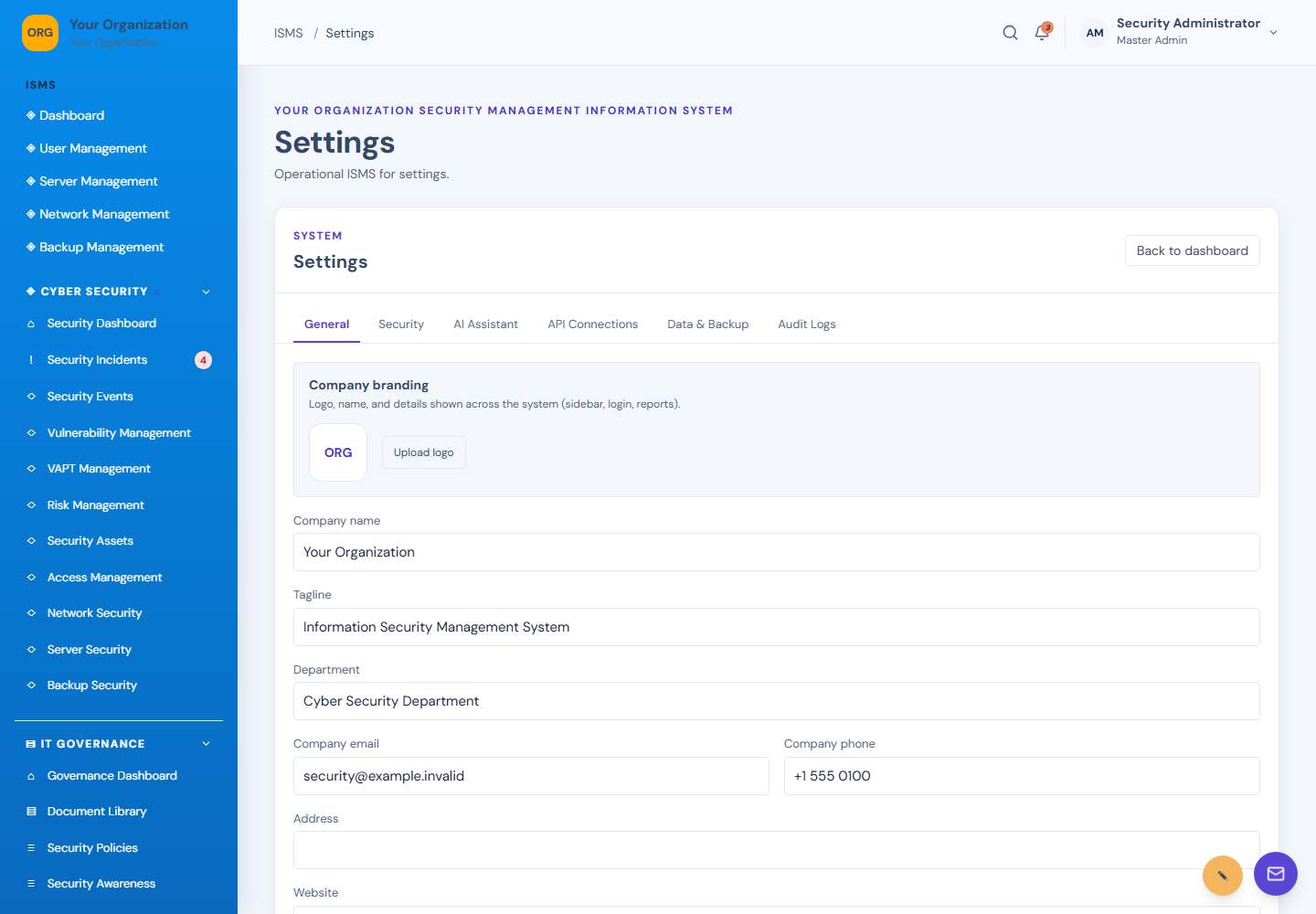
Watch the walkthrough or browse screenshots from 39 company-account menus, including security, governance, IT, HR, and user administration.
These screens use fictional sample records for demonstration. Available features depend on your account permissions and configured services.
How it works
Set clear ownership first, then use ISMS to capture work, review progress, and improve your program.
Create your company account, set up its data space, and choose the modules it needs.
Invite your team, create access levels, and assign only the modules needed for each role.
Log risks, incidents, assets, and findings; keep documents private or share them with selected colleagues.
Review reports and audit trails, run authorized checks, and follow corrective work through to closure.
Our vision & mission
Vision: Organizations of every size can build a safer, more accountable digital environment.
Mission: Provide teams with practical tools to coordinate security, governance, evidence, and continuous improvement.
Advantages at a glance
An ISMS supports a strong program; it does not replace informed people, approved policies, professional advice, or independent testing.
Small habits, stronger security
Practical reminders to help reduce common risks. Adapt them to your organization's policies and threat model.
Protect administrator and email accounts with MFA, and keep recovery methods current.
Use a password manager and never reuse a work password on personal websites.
Remove access promptly when roles change, and use the least privilege people need.
Keep protected backup copies and periodically prove that important data can be restored.
Prioritize exposed services and critical updates, then verify the update completed.
Use your incident process quickly; preserve useful evidence and avoid forwarding suspicious links.
Designed for thoughtful teams
Keep responsibilities visible, protect company information with access boundaries, and build a dependable record of the work.